Research · Publication & note
Processing and Characterization of Monodisperse Silicon Colloids - Notes

PROTOCOL
Published abstract
Silicon is widely used in electronics and solar cell devices because of its excellent semiconductor properties. Also, the large refractive index value of silicon enables the development of photonic devices. Here, we present a protocol to fabricate monodispere spherical colloids made of silicon with diameters between 300 nm and 500 nm. We also report on a home-built confocal microscope we have developed for the optical characterization of the nanoparticles. The optical characterization tool allows for optical properties of tiny particles and structure as small as 250 nm to be obtained. The results reported in the associated publications demonstrate silicon colloids sustain well-defined Mie resonances with a magnetic response suitable for processing metamaterials and photonic crystals.
Bibliographic note
This protocol was originally published in 2013 on Protocol Exchange, the community-contributed protocol platform operated by Nature Publishing Group. The original record identified itself as “PROTOCOL EXCHANGE | COMMUNITY CONTRIBUTED”, used the former nature.com/protocolexchange infrastructure and carried ISSN 2043-0116. The service was later migrated to different hosting infrastructure. That migration does not change the bibliographic identity of the work: it remains a Protocol Exchange protocol with DOI 10.1038/protex.2013.066, not an article in the journal Nature Protocols.
Article access and reuse
The DOI link points to the current record associated with the original Protocol Exchange publication. The locally supplied migrated manuscript and troubleshooting files are not hosted here because their internal bibliographic presentation does not reproduce the original record reliably. No figures are separately reproduced on this page.
Related publications
Research fields
Bottom-up
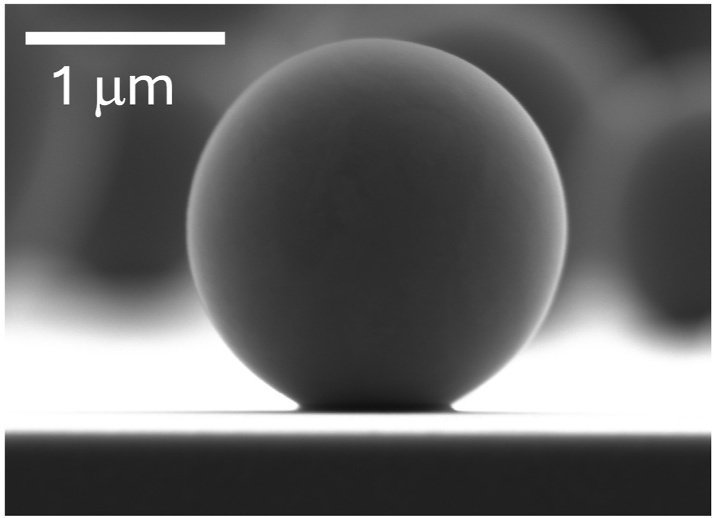
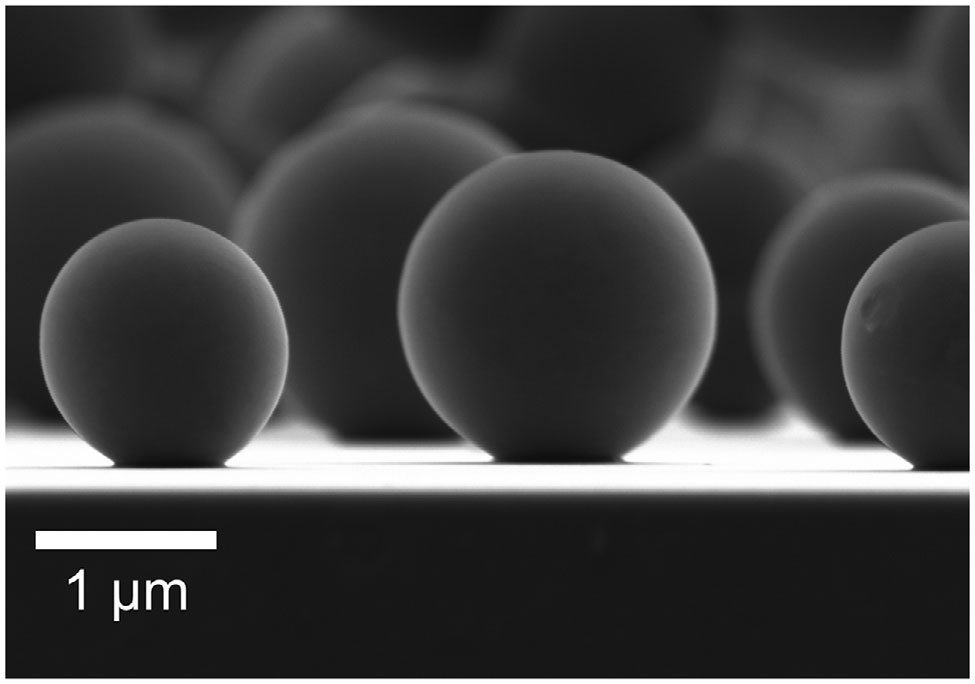
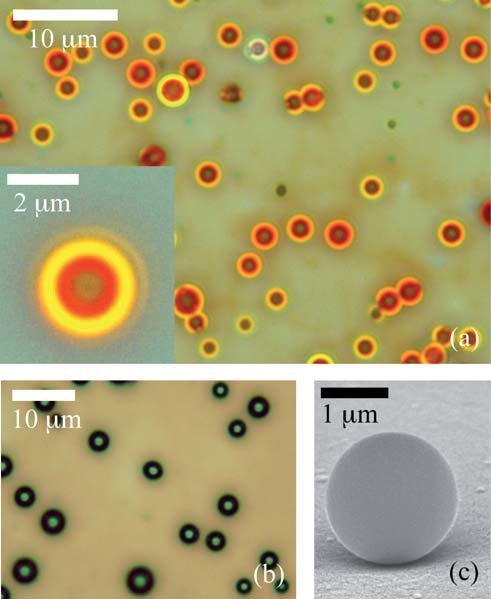
The protocol forms 300-500 nm hydrogenated amorphous-silicon spheres by thermolysis of trisilane in supercritical n-hexane. Controlled precursor loading, reaction temperature and pressure set the particle size and hydrogen content; subsequent high-vacuum annealing removes hydrogen, raises the refractive index and contracts the particles while preserving their spherical shape and narrow size distribution.
Characterization
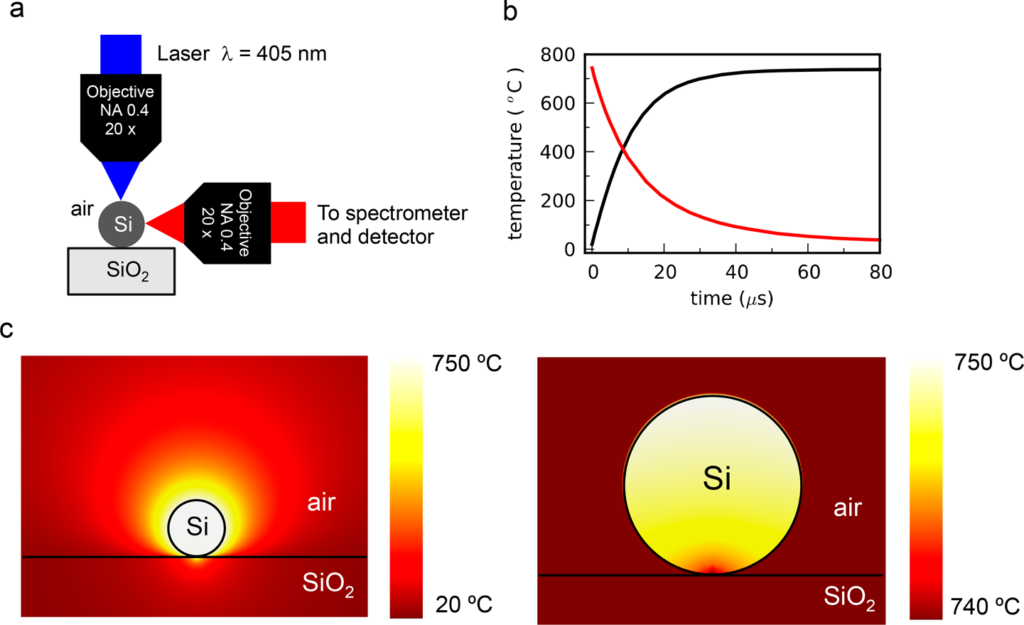
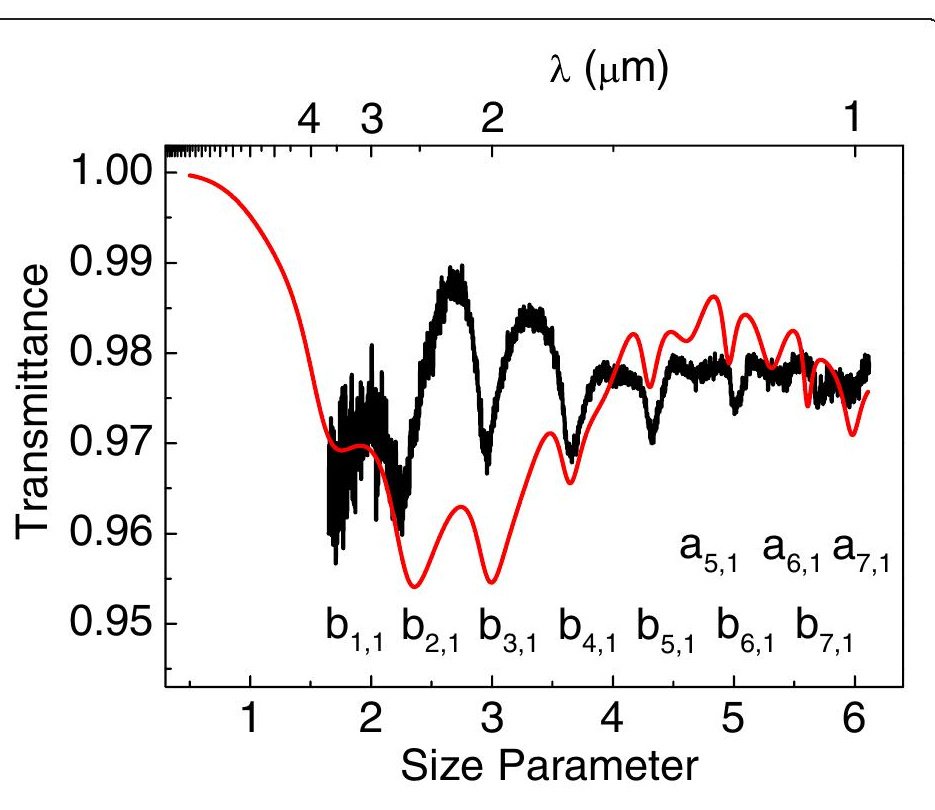
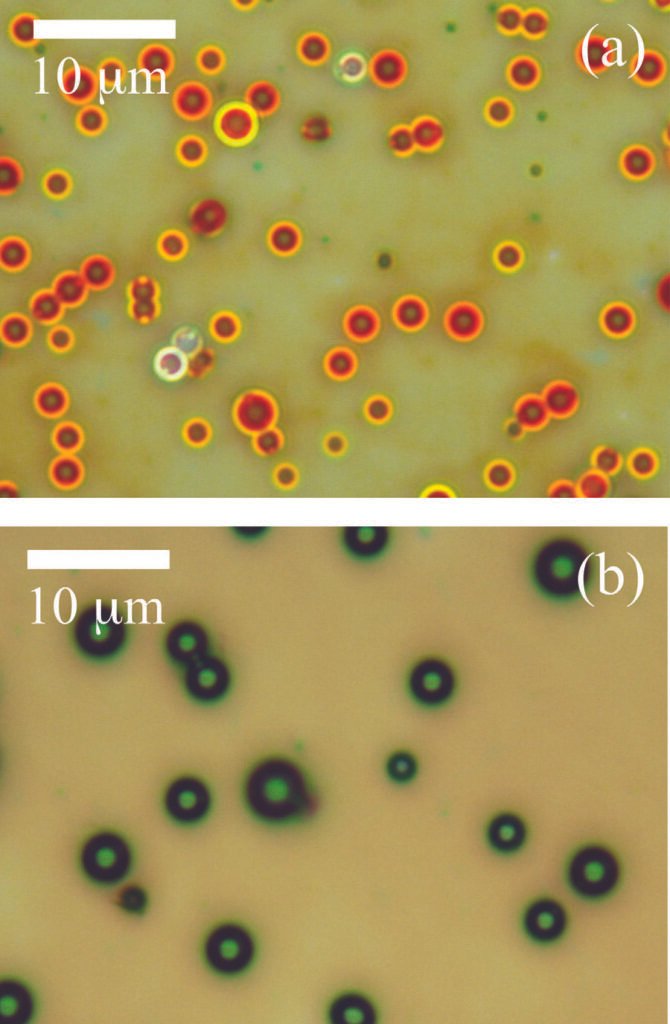
A home-built near-infrared confocal microscope isolates one colloid at a time and couples its transmitted light to a spectrometer. Comparing the spectrum of an annealed particle with that of the corresponding suspension shows low-order Mie dips near 1250 nm and tests whether the ensemble retains the optical response measured from a single high-index sphere.
Research topics
 MaterialsThe process separates two material states of the same particle. This controlled transformation makes the colloids suitable as high-index dielectric building blocks rather than merely silicon particulates.
 ResonatorsAn annealed silicon sphere of about 380 nm supports low-order Mie resonances in the near infrared. The connection between particle size, refractive index and resonance position is why strict control of synthesis and annealing is central to the method.
 SetupsThe optical section details a home-built NIR confocal microscope coupled to a spectrometer. A deposited colloid is selected through the confocal aperture, the optical train is tuned for signal-to-noise, and an InGaAs detector cooled with liquid nitrogen records the spectrum.
 ChemistryTrisilane is decomposed in supercritical n-hexane inside a sealed titanium reactor under inert handling because the precursor is pyrophoric. Reaction temperature, precursor concentration and solvent loading control hydrogen content and particle size; later vacuum annealing removes hydrogen.