Research · Publication & note
Mirror-Image-Induced Magnetic Modes - Notes
Journal article
ACS Nano
Volume 7
Issue 1
Pages 664-668
2013
Published abstract
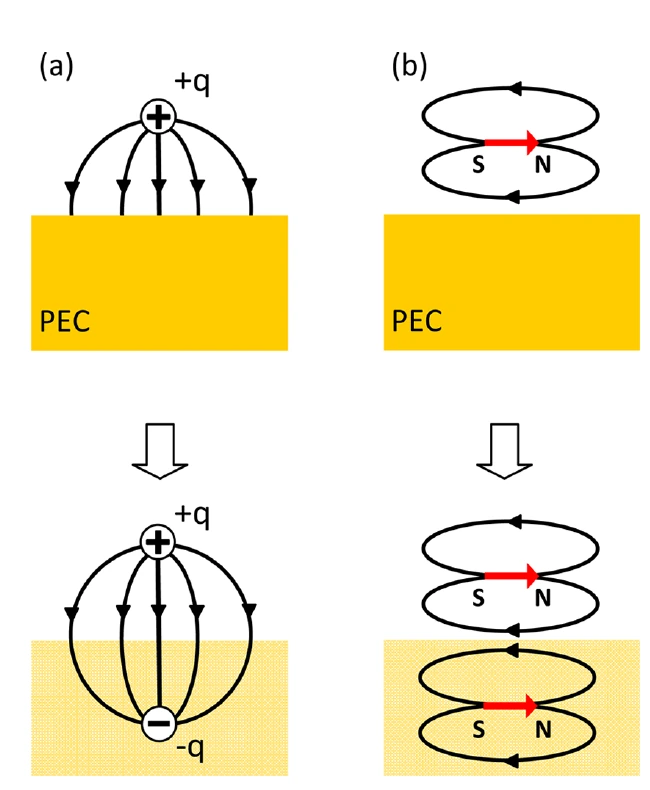
Reflection in a mirror changes the handedness of the real world, and right-handed objects turn left-handed and vice versa. Also, we learn from electromagnetism textbooks that a flat metallic mirror transforms an electric charge into a virtual opposite charge. Consequently, the mirror image of a magnet is another parallel virtual magnet as the mirror image changes both the charge sign and the curl handedness. Here we report the dramatic modification in the optical response of a silicon nanocavity induced by the interaction with its image through a flat metallic mirror. The system of real and virtual dipoles can be interpreted as an effective magnetic dipole responsible for a strong enhancement of the cavity scattering cross section.
Figures
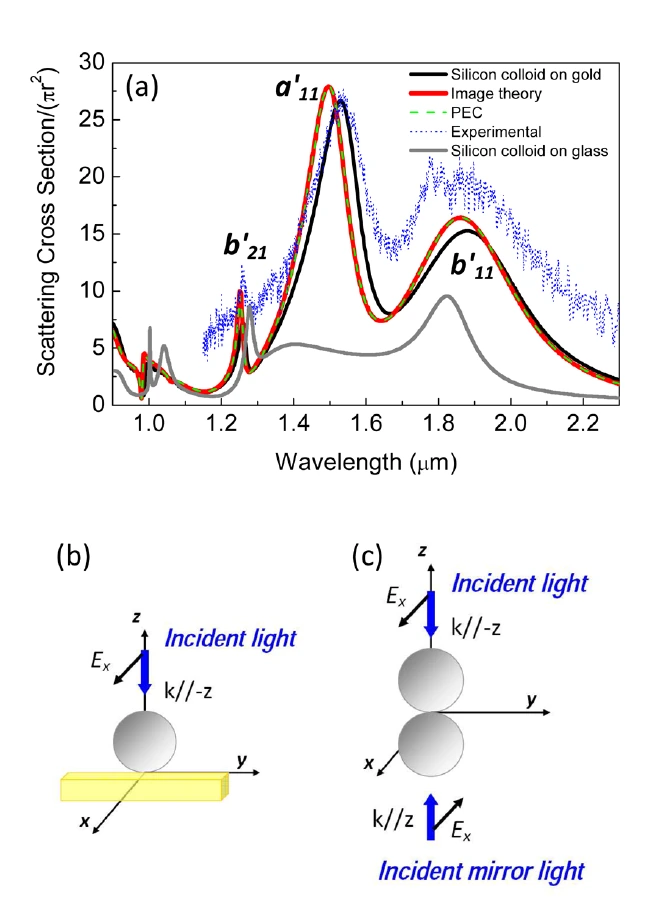
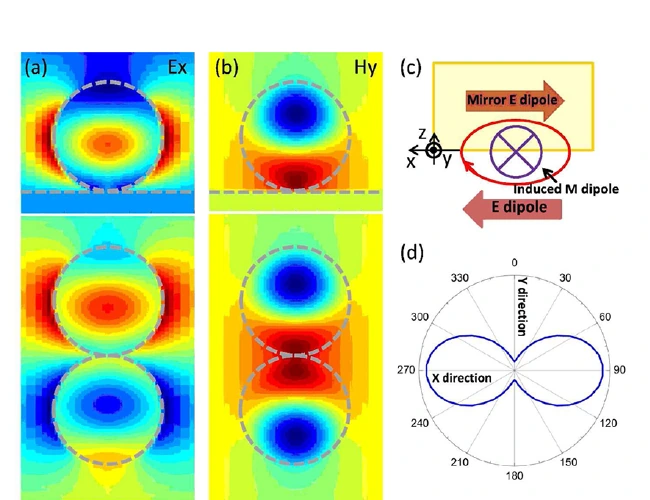
Figures reproduced for non-commercial use on the author’s personal website from E. Xifré-Pérez et al., ACS Nano 7, 664-668 (2013), DOI: 10.1021/nn304855t. Copyright © 2012 American Chemical Society. ACS sharing policy
How to cite
Article access and reuse
Copyright © 2012 American Chemical Society. The Version of Record was published in ACS Nano. The figures shown here are used non-commercially on an author’s personal website with full citation and remain subject to ACS copyright, sharing and permissions policies.
Related publications

Research fields
Bottom-up
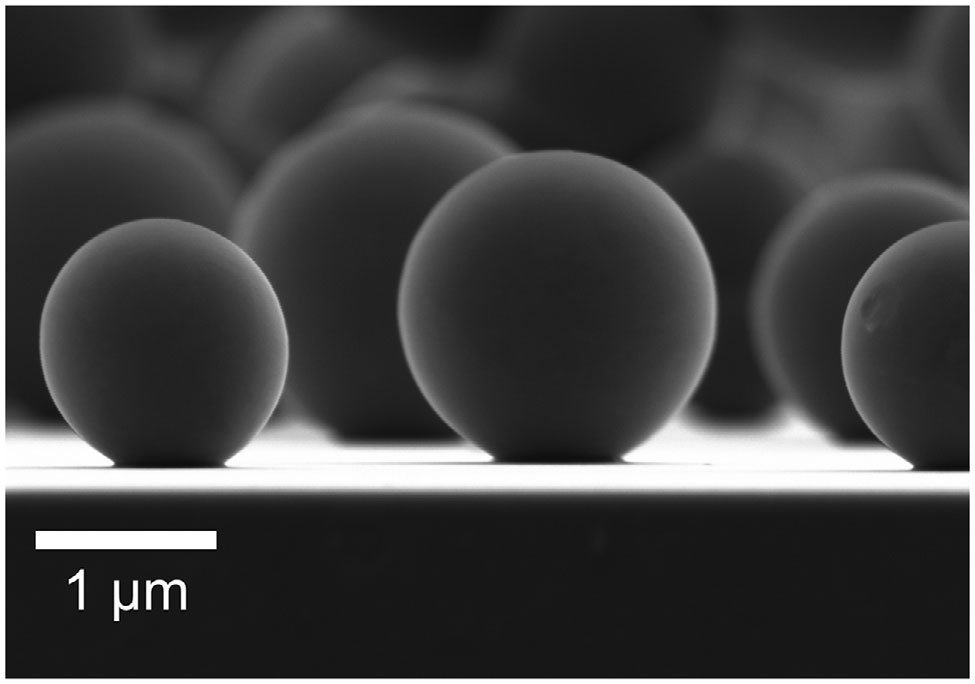
A polycrystalline silicon microsphere provides a high-index dielectric nanocavity whose resonances are set by particle size. Placing the same type of cavity on glass or near a metallic mirror changes its environment without redesigning the particle itself.
Simulations & fits
Three-dimensional FDTD calculations compare the real sphere-mirror system with an image-dipole construction. Electric- and magnetic-field maps show how the mirror suppresses or reinforces specific Mie multipoles and produces the observed magnetic response.
Characterization
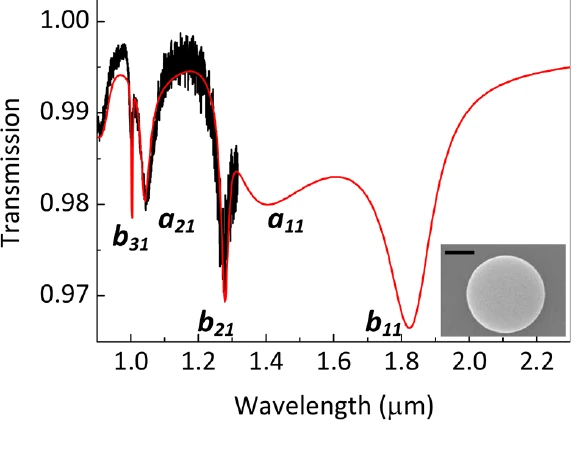
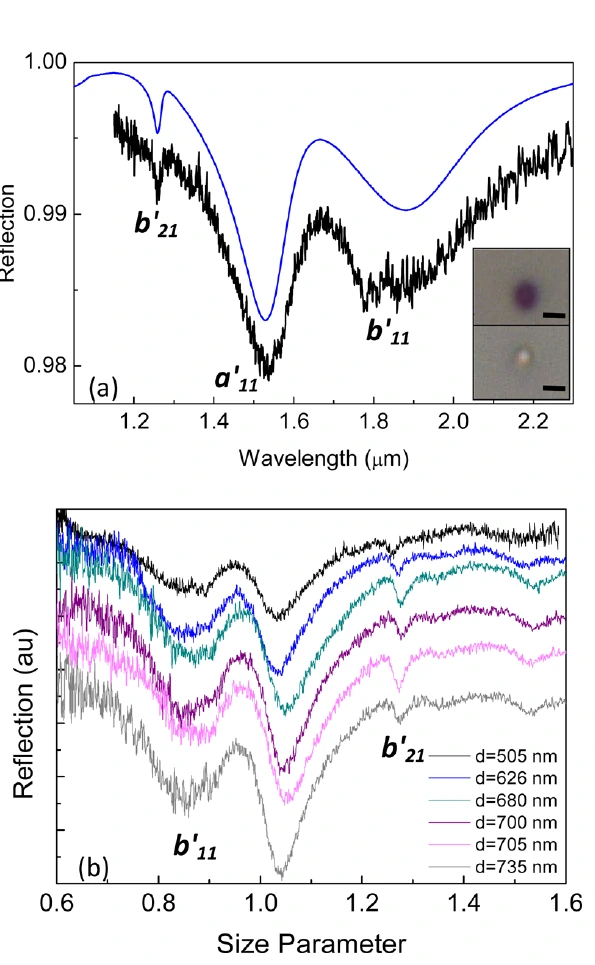
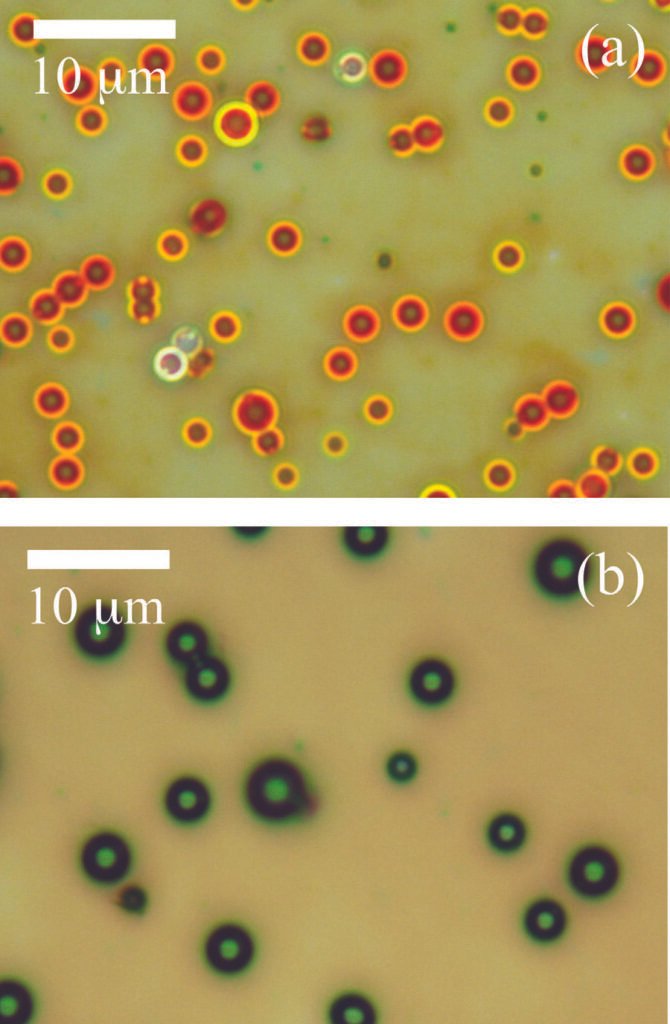
Fourier-transform infrared reflection and transmission spectra are recorded for individual spheres on gold and glass. Mode assignments and microscope-based diameter estimates allow the spectral changes to be attributed to interaction with the virtual image rather than to particle-size variation.
RESEARCH TOPICS
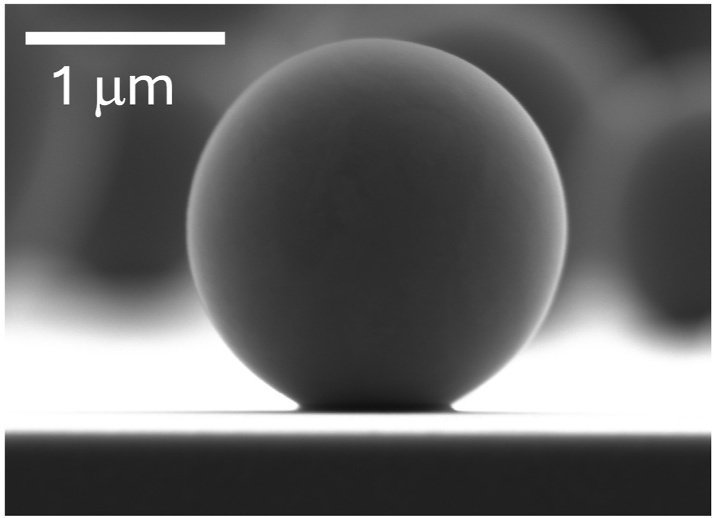
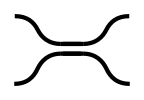 CouplingA 505 nm polycrystalline-silicon sphere is first characterised on glass and then transferred onto a gold-coated substrate. The metal does not behave like a second identical resonator: its reflected field has the opposite phase, so the sphere couples to an electromagnetic image rather than producing the usual symmetric/antisymmetric mode splitting of two real cavities.
 InterferenceThe decisive field is formed by the electric dipole of the silicon sphere and its phase-inverted mirror image. Their antisymmetric combination suppresses the ordinary electric-dipole picture and produces a circulating displacement-current pattern.
 MagnetismThe mirror converts the sphere's a₁₁ electric mode into a magnetic-like resonance with a scattering cross-section larger than the other cavity modes. Unlike metallic magnetic resonators, this response lies in silicon's transparency region, so it avoids much of the absorption normally associated with plasmonic structures.
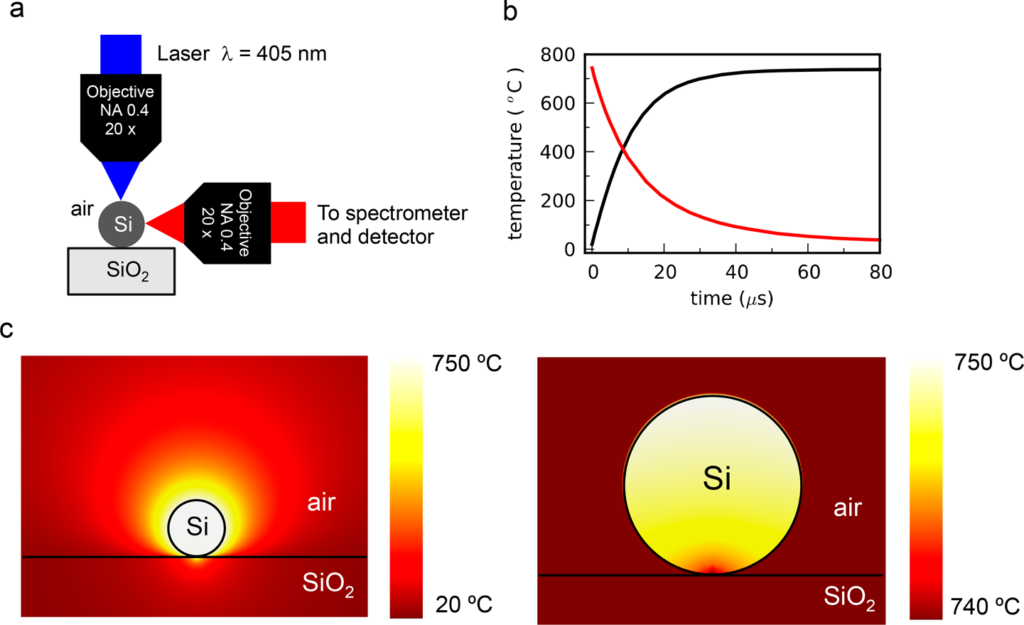
 MaterialsThe colloids are annealed for one hour at 800 °C in vacuum to transform amorphous silicon into polycrystalline silicon. Using one physical sphere in both environments isolates the substrate-induced change from particle-to-particle variability.
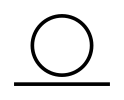 ResonatorsMie theory identifies the electric and magnetic multipoles supported by the isolated silicon nanocavity. The experiment therefore treats the mirror spacing and phase relation as part of the resonator design, not merely as a reflective substrate.