Research · Publication & note
Microring Resonators and Silicon Photonics - Notes

Review article
Published abstract
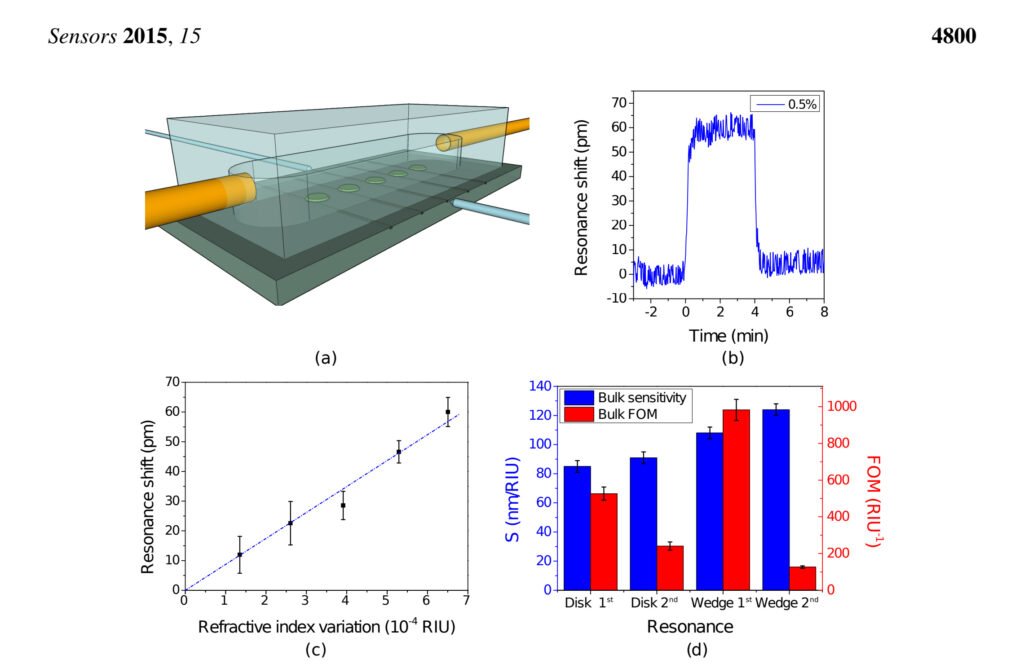
Silicon Photonics is the technological to face the future challenges in data communications and processing. This technology follows the same paradigm as the technological revolution of the integrated circuit industry, that is, the miniaturization and the standardization. One of the most important building blocks in Silicon Photonics is the microresonator, a circular optical cavity, which enables many different passive and active optical functions. Here, we will describe the new physics of the intermodal coupling, which occurs when multi radial mode resonators are coupled to waveguides, and of the optical chaos, which develops in coupled sequence of resonators. In addition, an application of resonators in the label-free biosensing will be discussed.
Article access and reuse
The consulted PDF and journal record carry Materials Research Society copyright. The PDF is retained locally for verification, while no PDF or extracted figures are republished here because no open reuse licence was identified. Consult the official Cambridge record and permissions information. Official Cambridge University Press article record · Rights and permissions.
Related publications


Research fields
Top-down
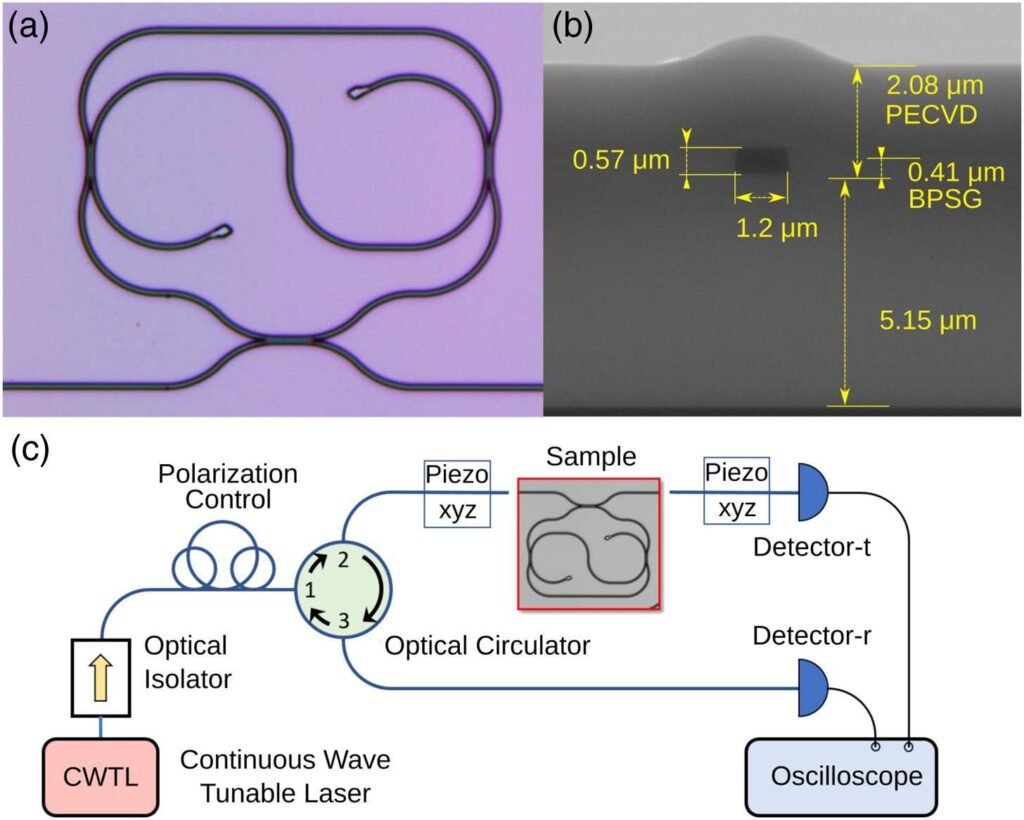
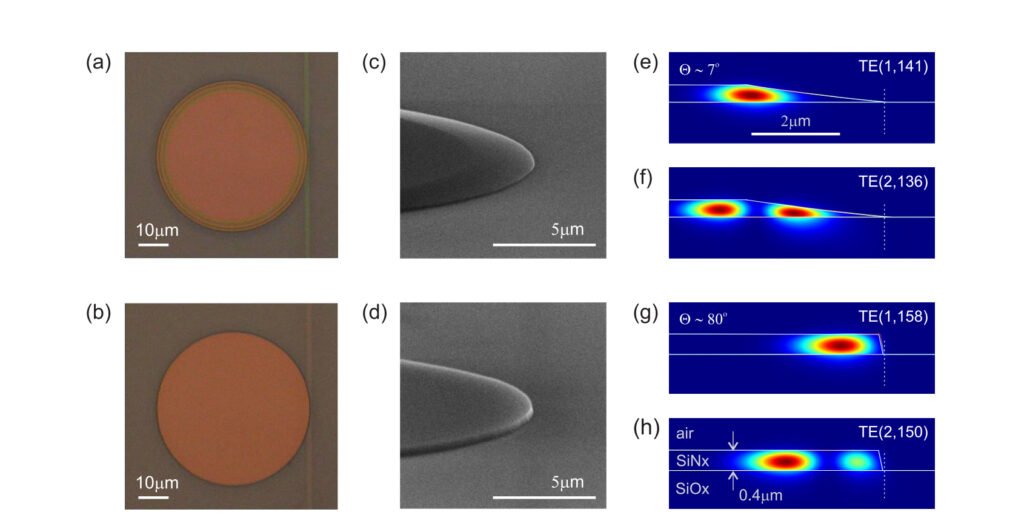
The work surveys silicon microring circuits fabricated for filtering, modulation, switching and coupled-resonator functions. It links the lithographic control of waveguide-ring gaps, radii and material stacks with the spectral response required by each device class.
Simulations & fits
Coupled-mode descriptions provide the common language for resonance linewidth, quality factor, extinction, dispersion and nonlinear detuning. The framework shows how the same compact resonator evolves from a passive filter into a dynamically controlled photonic element.
Characterization
Transmission, phase and power-dependent measurements are considered together because microring performance cannot be described by a resonance wavelength alone. Their combination separates coupling losses, intrinsic losses and thermally or carrier-induced changes in fabricated silicon devices.
RESEARCH TOPICS
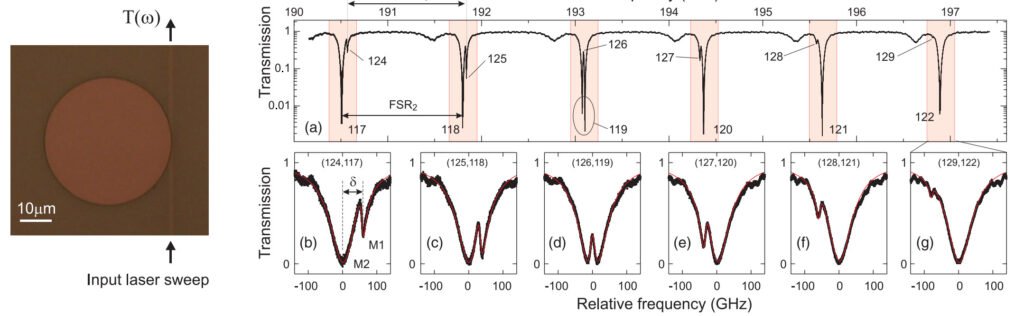
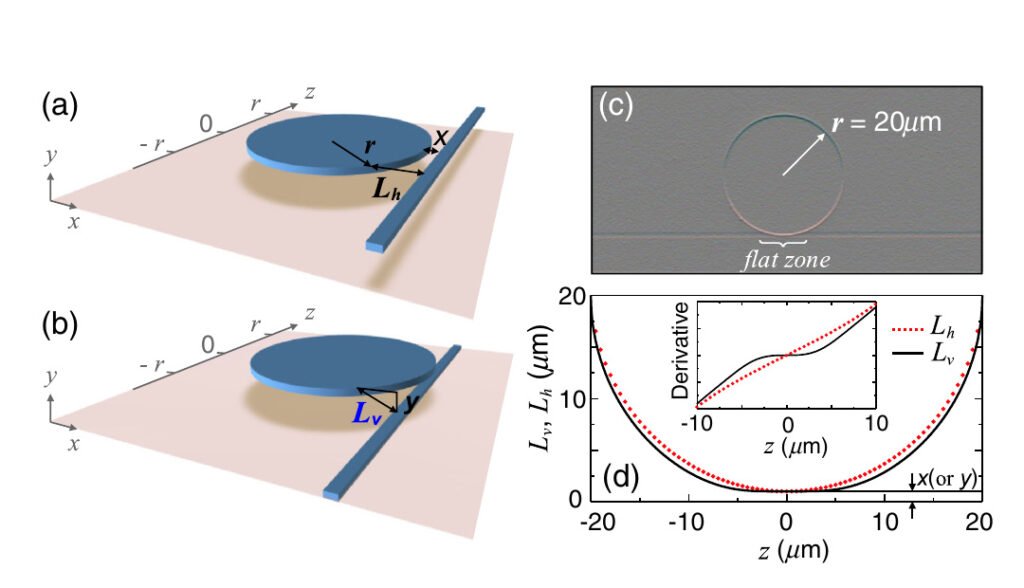
 CouplingThe resulting Fano or transparency-like line shapes depend on detuning, linewidth and coupling phase. At a larger scale, the article compares this intermodal interaction inside one ring with the collective response of sequences of side-coupled rings, where propagation phase connects distinct cavities.
 MultimodeSilicon microrings support several radial families, each forming its own comb of azimuthal resonances. The review uses these examples to show that multimode behaviour can be engineered for filtering and sensing rather than regarded only as unwanted spectral clutter.
 NonlinearThe review links these regimes to switching, optical memory and neuromorphic functions while stressing that a measured power-dependent shift is not automatically an ultrafast Kerr response. Correct interpretation requires separating instantaneous and delayed material mechanisms.
 ResonatorsMicrorings are presented as compact silicon-photonic building blocks for wavelength filters, switches and label-free biosensors. By moving from a single resonance to radial-family coupling and then to resonator chains, the article explains how cavity geometry and network topology determine device behaviour more completely than Q alone.