Research · Publication & note
Oscillatory Vertical Coupling between a Whispering-Gallery Resonator and a Bus Waveguide - Notes

Related publications



Research fields
Top-down
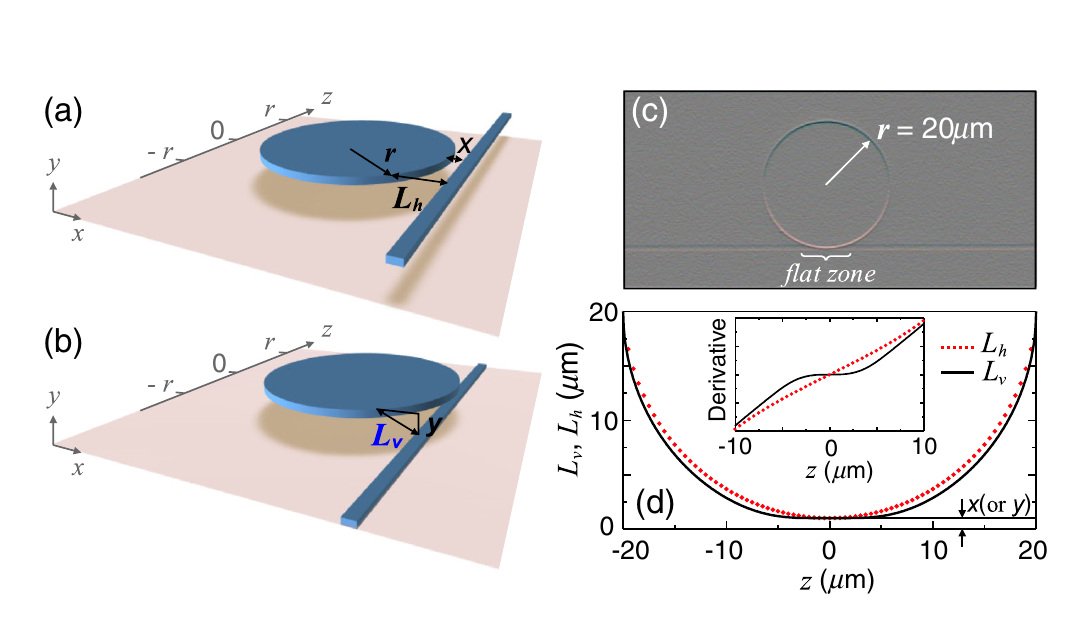
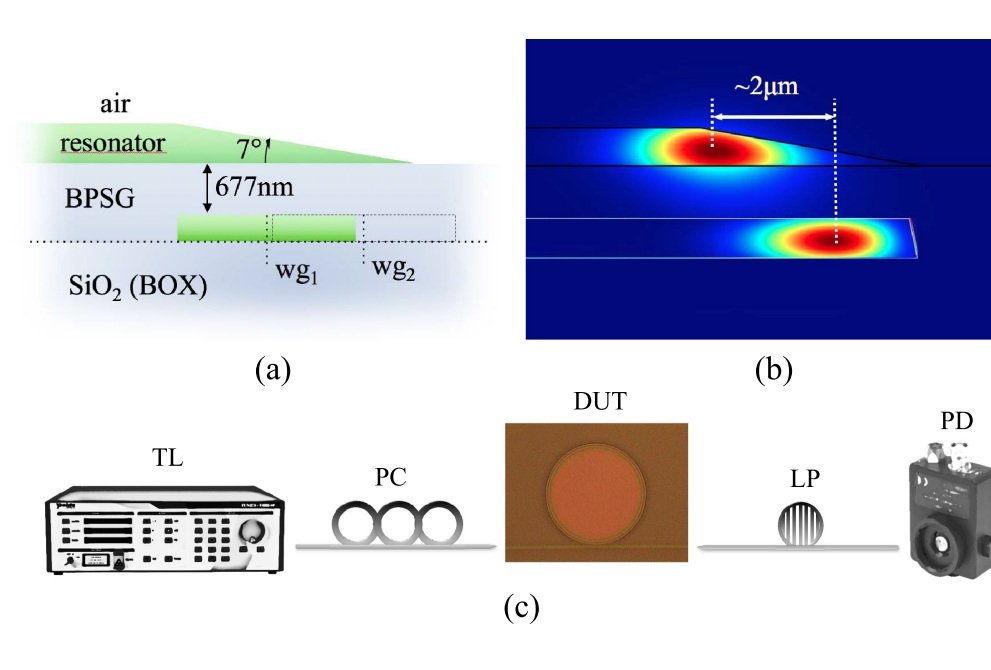
The resonator and bus waveguide are fabricated in separate vertical planes, creating an extended co-propagation region instead of a local side-coupling point. Film thickness and gap set the phase accumulated between the two guided fields.
Simulations & fits
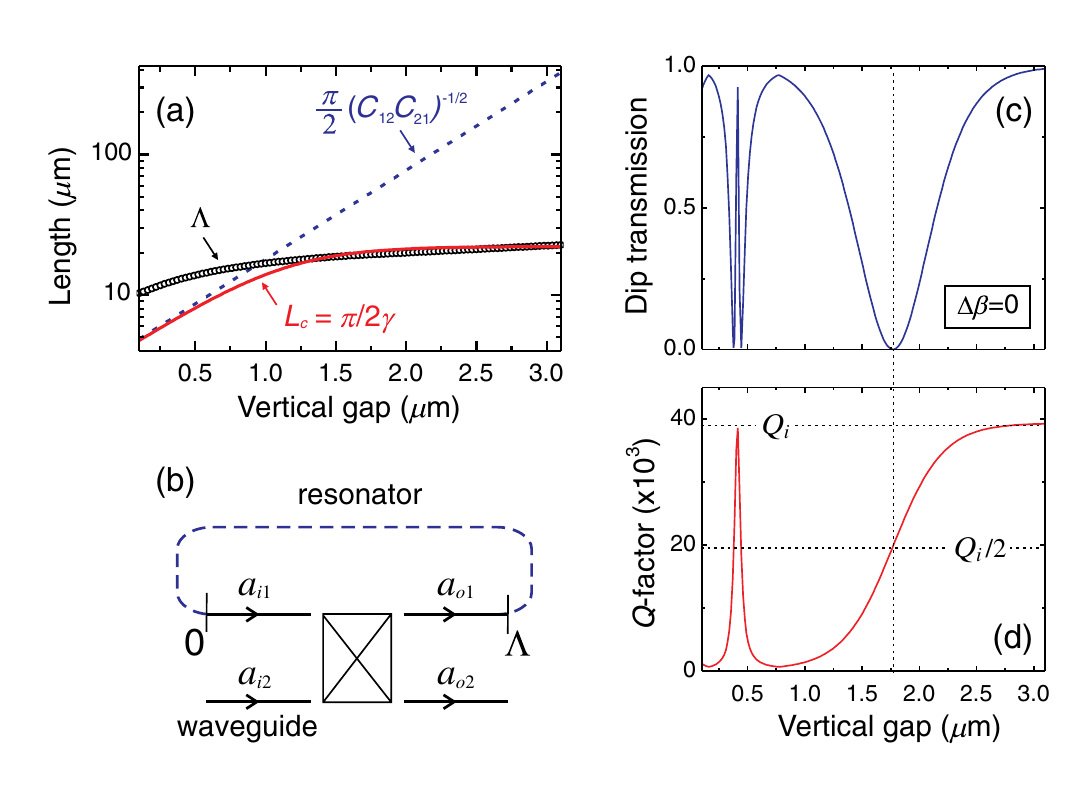
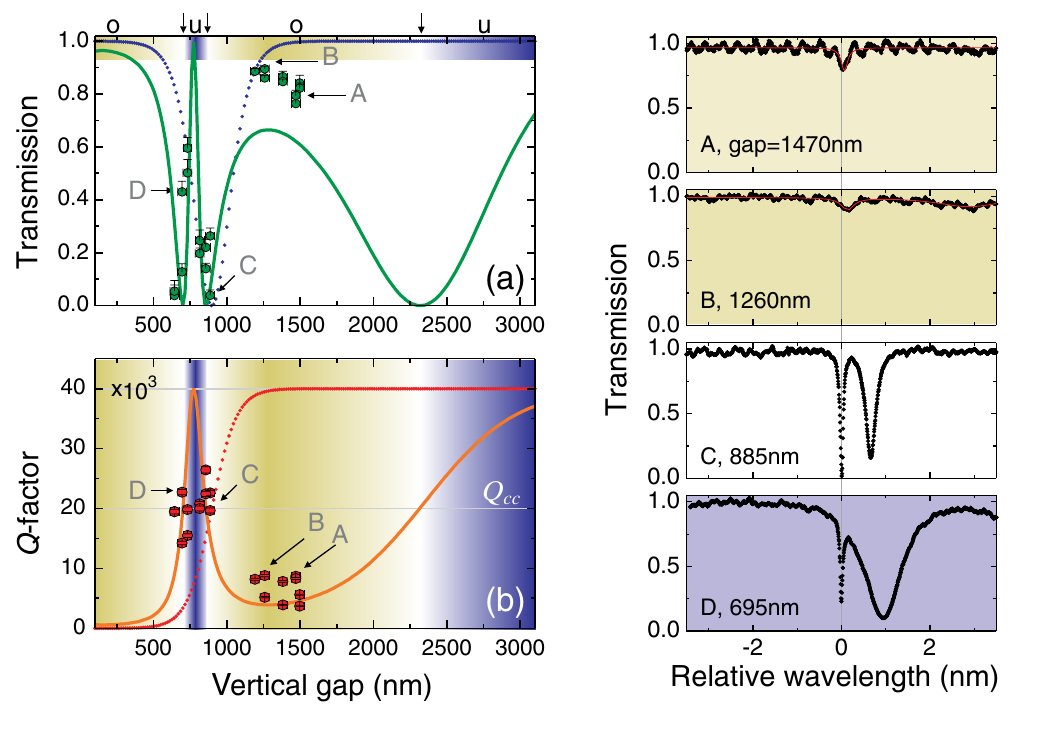
Coupled-mode theory and a two-port beam-splitter model predict that the net transfer oscillates with vertical separation. The same description accounts for periodic changes in transmission depth and loaded quality factor for different radial mode families.
Characterization
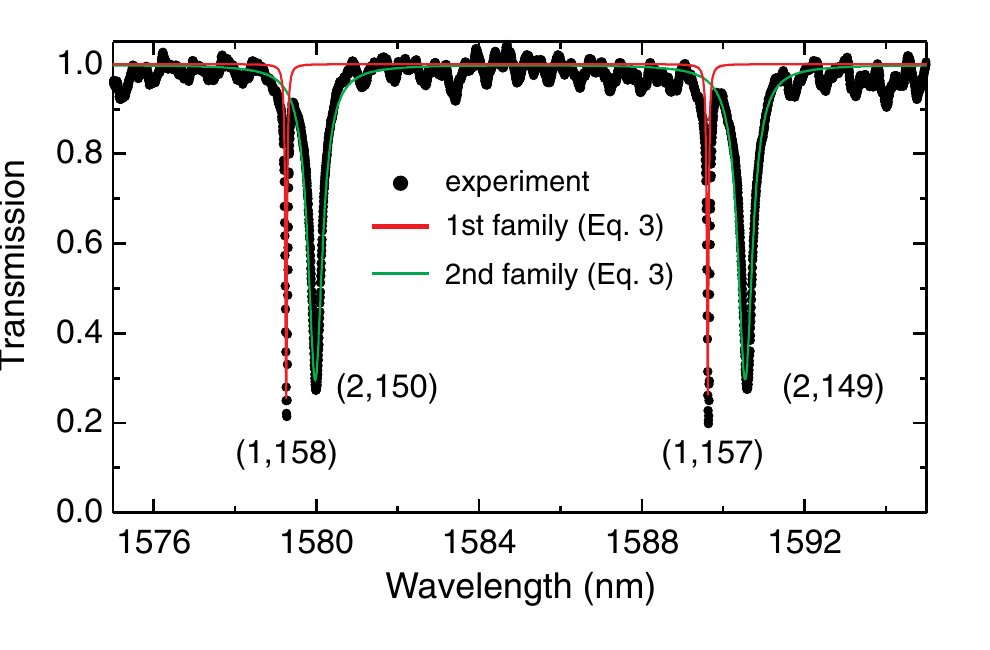
Spectra from devices spanning nominal coupling gaps resolve alternating over-, critical- and under-coupled conditions. Comparing broad and narrow radial families confirms that the oscillation follows their distinct propagation constants rather than a monotonic evanescent-gap law.
RESEARCH TOPICS
 CouplingIn a vertical geometry the guide and resonator run parallel over an extended interaction length rather than touching at a single local point. The coupling region can therefore be modelled as two evanescently coupled waveguides followed by a two-port beam splitter.
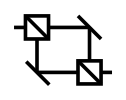 InterferenceThe oscillation is a phase-matching effect. Resonance depth and linewidth oscillate together, confirming that the repeated critical-coupling points arise from coherent exchange rather than fabrication scatter.
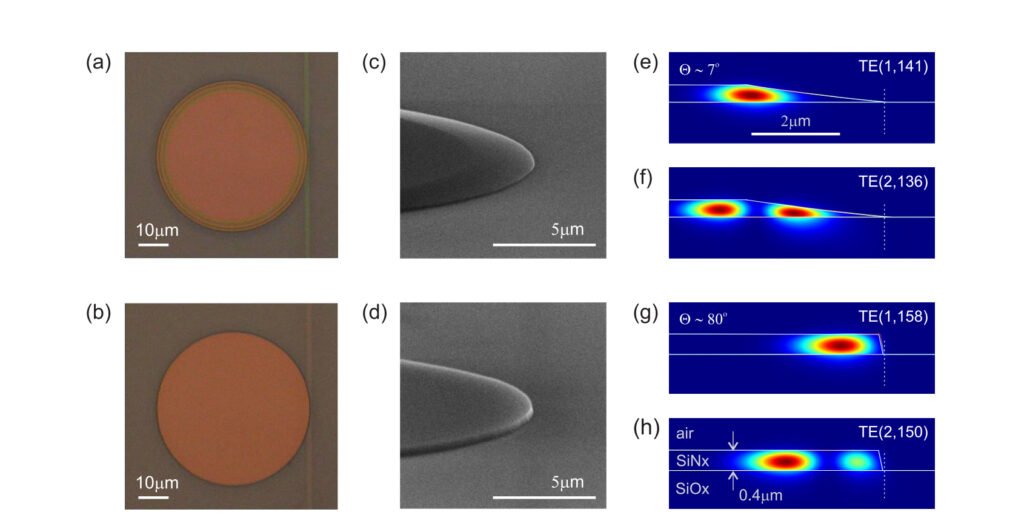
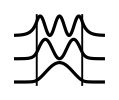 MultimodeThe measurement follows more than one radial family, and Figure 3 shows that the second family has its own gap-dependent transmission curve. This family dependence provides an additional test of the coupled-mode model and warns against assigning a single monotonic coupling coefficient to every resonance in a vertically integrated disk.
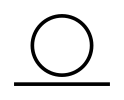 ResonatorsA cavity round-trip condition is combined with the extended coupler model to predict both transmission minima and loaded Q. The result turns vertical separation into a precise design parameter, but also shows that choosing the smallest gap does not necessarily give the strongest loading.