Research · Publication & note
Packing Confined Hard Spheres Denser with Adaptive Prism Phases - Notes
Physical Review Letters · Journal article · 21 November 2012
Published abstract
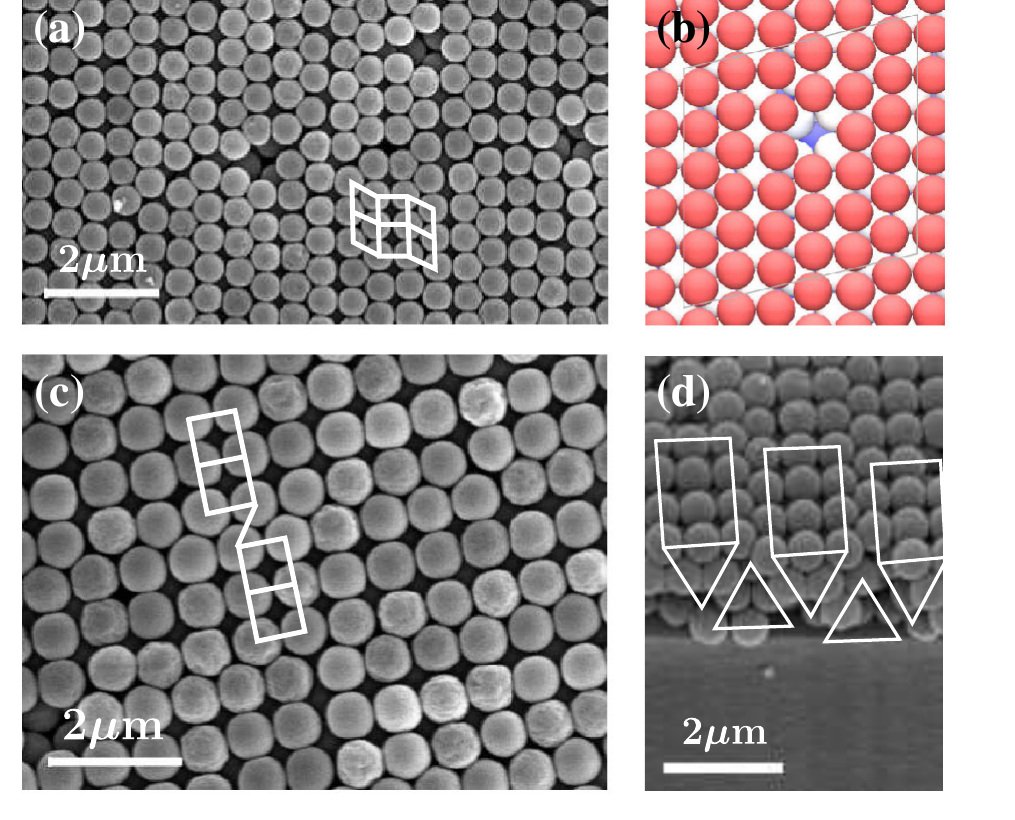
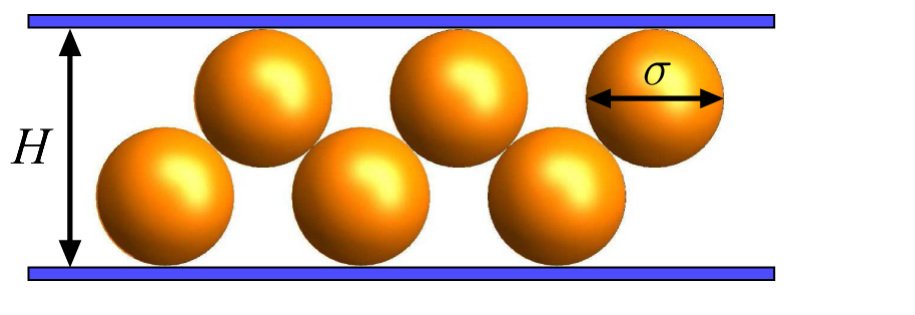
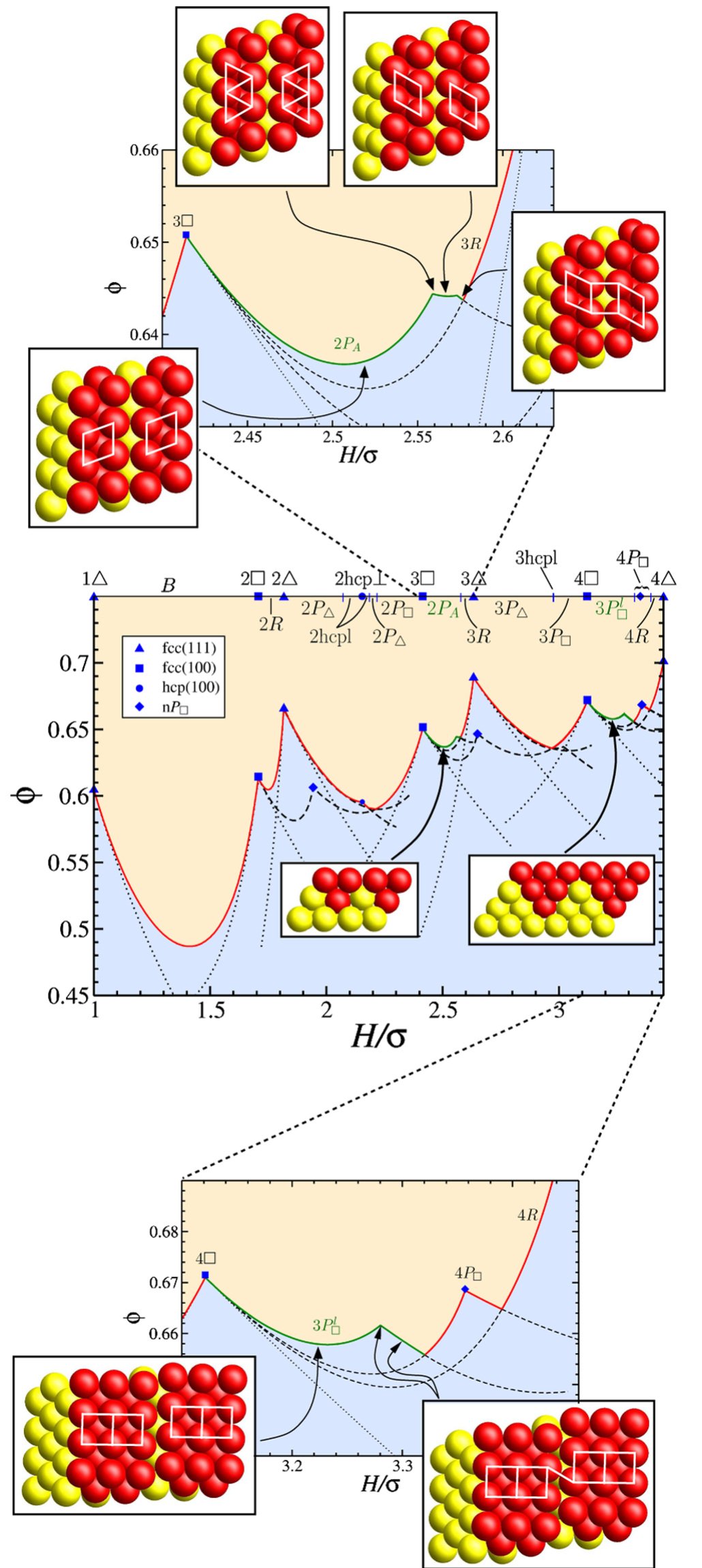
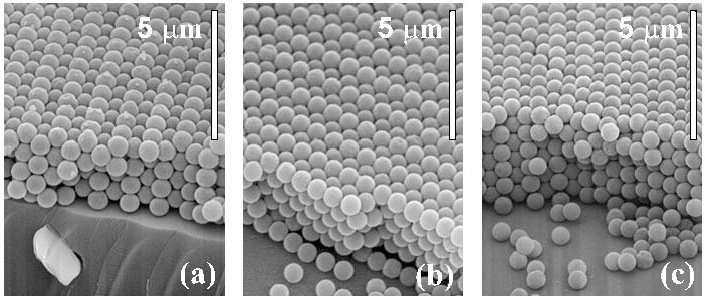
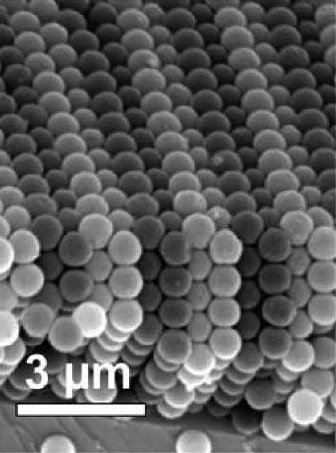
We show that hard spheres confined between two parallel hard plates pack denser with periodic adaptive prismatic structures which are composed of alternating prisms of spheres. The internal structure of the prisms adapts to the slit height which results in close packings for a range of plate separations, just above the distance where three intersecting square layers fit exactly between the plates. The adaptive prism phases are also observed in real-space experiments on confined sterically stabilized colloids and in Monte Carlo simulations at finite pressure.
Figures
From E. C. Oğuz et al., Physical Review Letters 109, 218301 (2012), DOI 10.1103/PhysRevLett.109.218301. © 2012 American Physical Society.
From E. C. Oğuz et al., Physical Review Letters 109, 218301 (2012), DOI 10.1103/PhysRevLett.109.218301. © 2012 American Physical Society.
From E. C. Oğuz et al., Physical Review Letters 109, 218301 (2012), DOI 10.1103/PhysRevLett.109.218301. © 2012 American Physical Society.
From E. C. Oğuz et al., Physical Review Letters 109, 218301 (2012), DOI 10.1103/PhysRevLett.109.218301. © 2012 American Physical Society.
How to cite
Article access and reuse
APS permits authors to post all or part of the APS-published article, including the publisher-prepared PDF, on a free author or employer website. The bibliographic citation and APS copyright notice accompany the material here.
Related publications

Research fields
Bottom-up
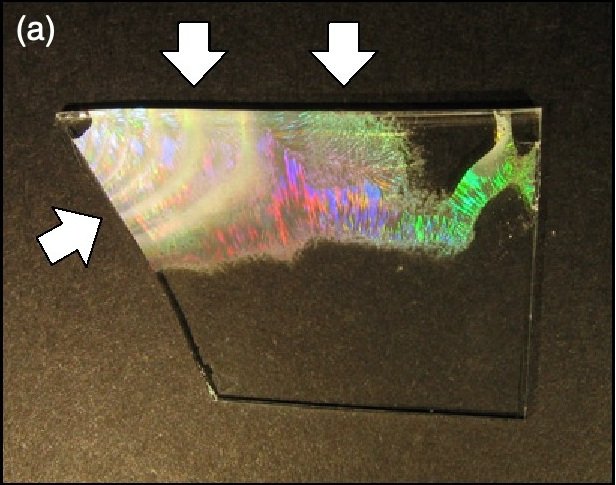
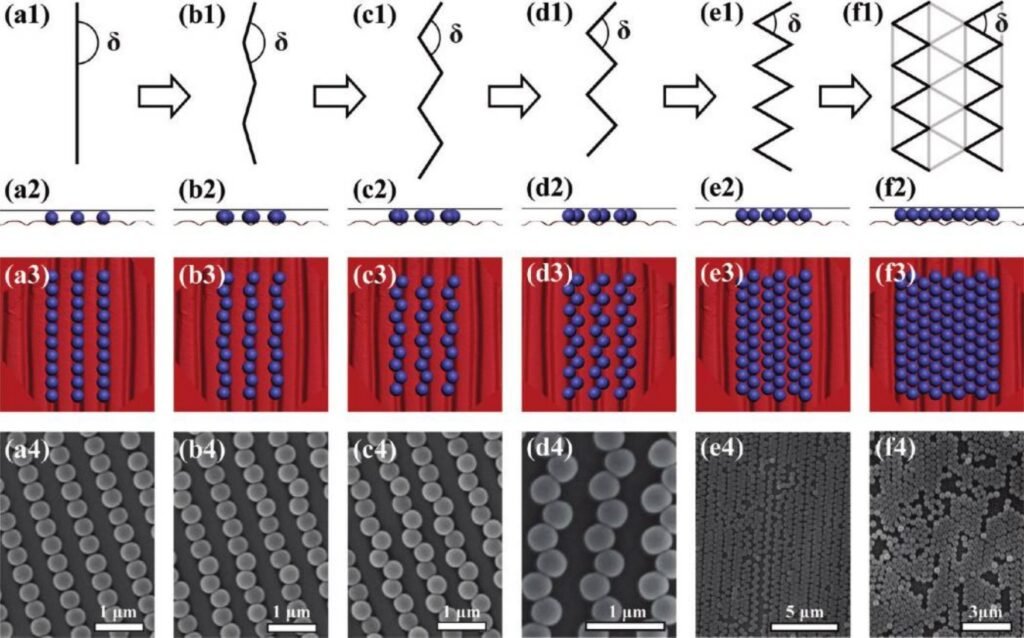
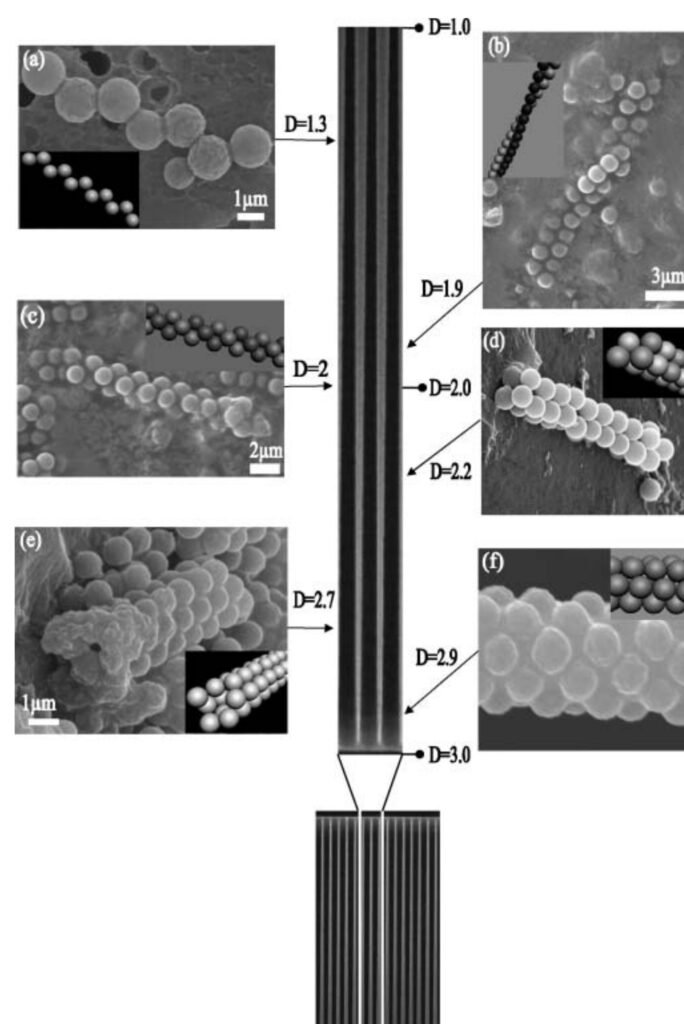
Hard-sphere colloids assemble between parallel plates whose separation restricts the available packing. The particles respond to this geometric frustration by forming rhombic prism phases that continuously adapt their base angle as the slit width changes.
Simulations & fits
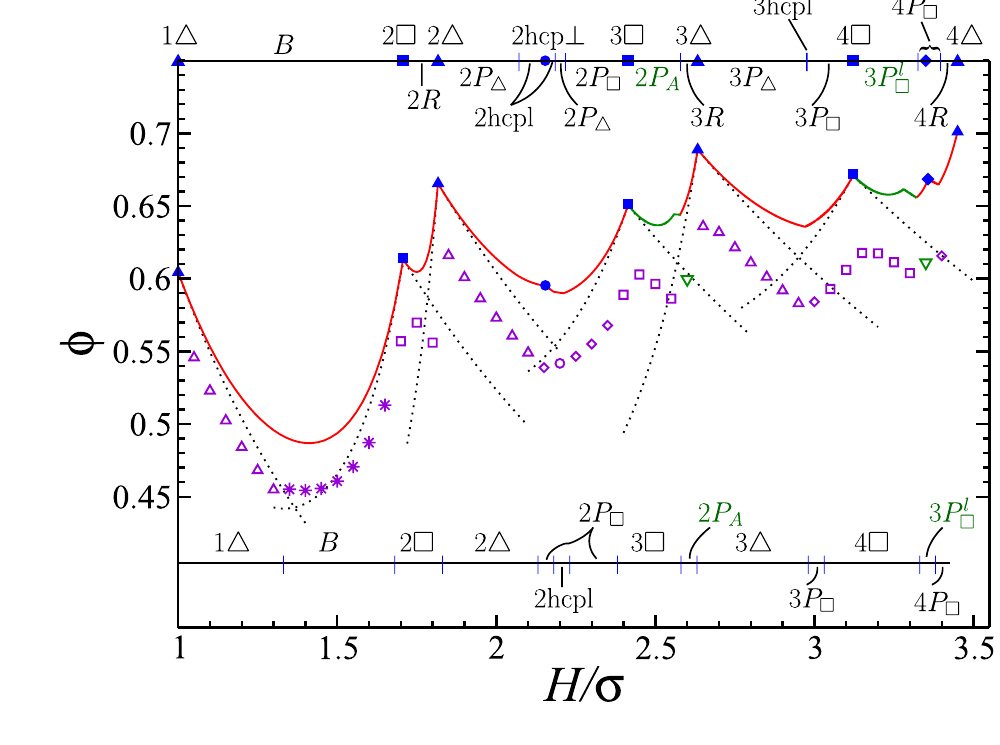
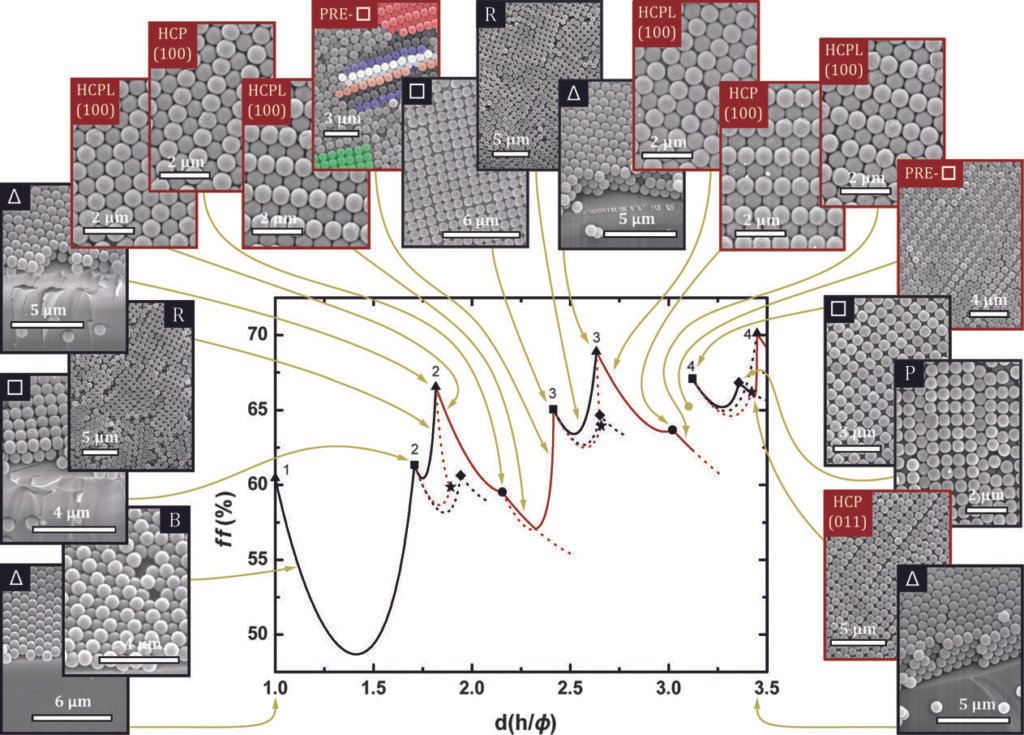
Close-packing calculations and constant-pressure simulations map the stable structures over plate separation and density. The model identifies intervals where adaptive prisms pack more efficiently than the conventional triangular or square layer sequences.
Characterization
Cross-sectional SEM images resolve the predicted two- and three-layer prism arrangements in confined samples. Agreement between particle coordinates, simulated packing fractions and microscopy establishes the phases as equilibrium responses rather than isolated defects.