Research · Publication & note
Colloidal Crystal Wires - Notes
Advanced Materials · Journal article · 18 June 2008
Published abstract
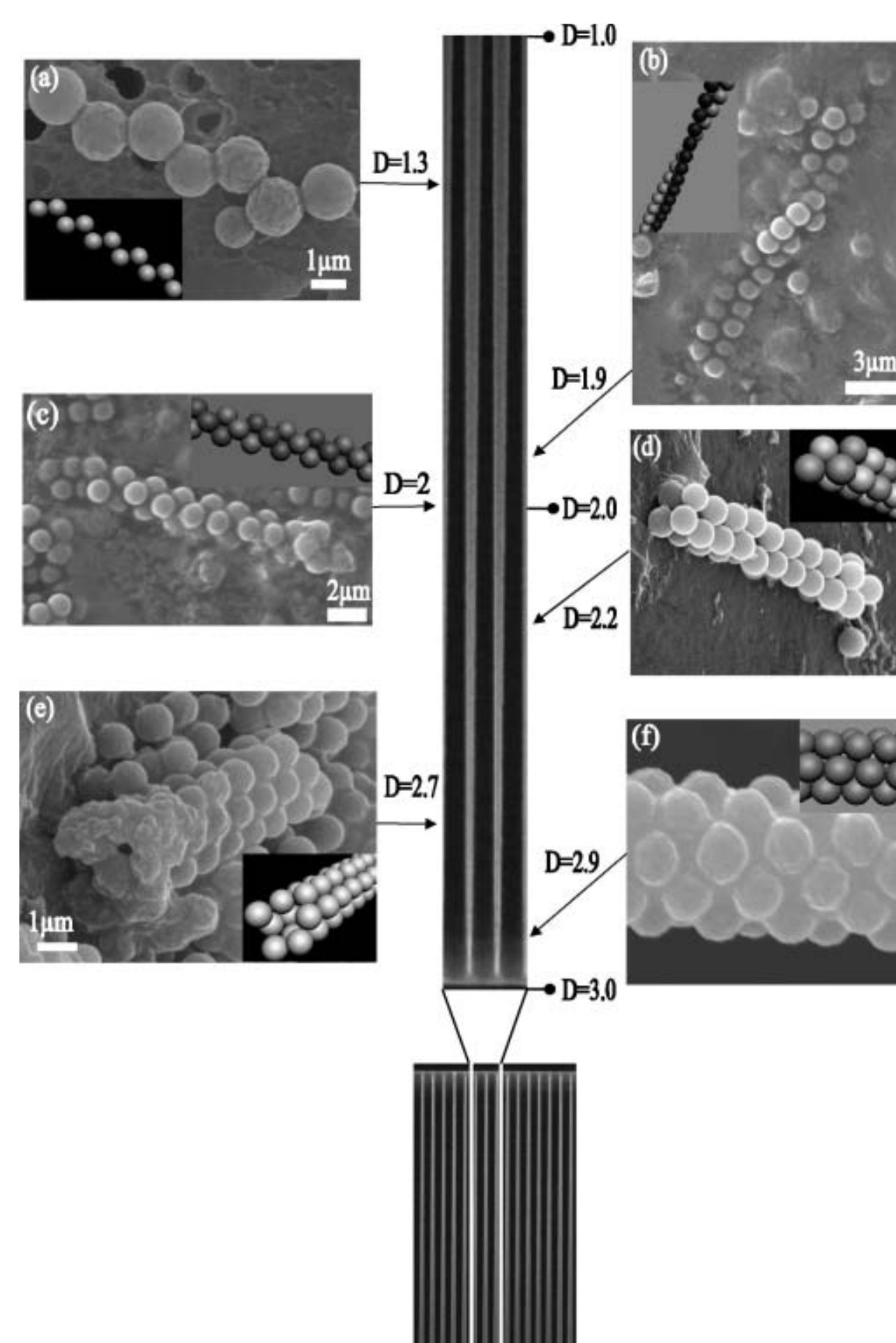
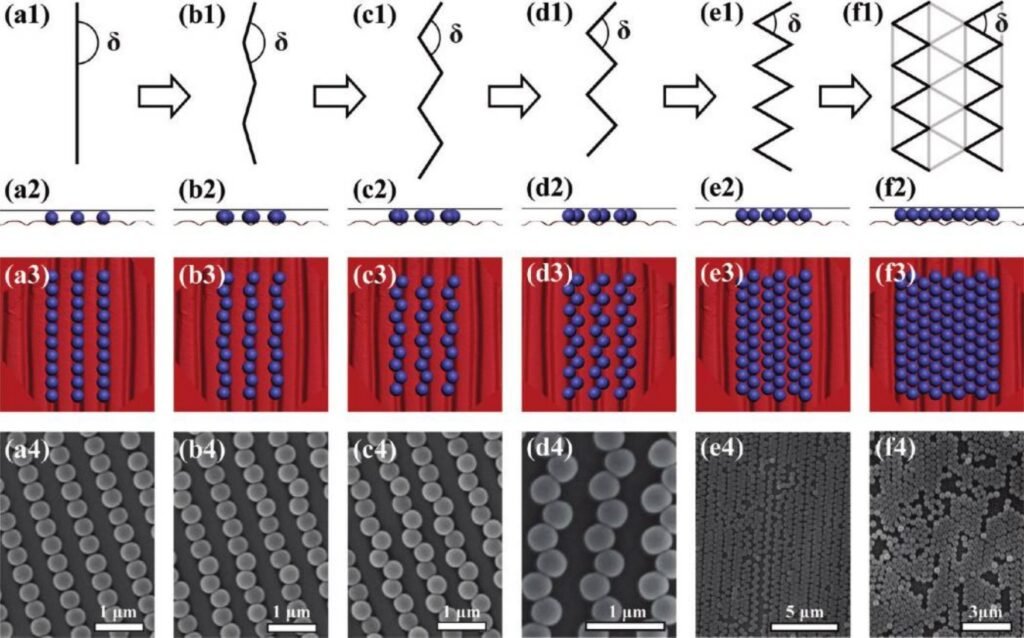
Several configurations of colloidal wires are obtained by infiltration of charge-stabilized polystyrene spheres into cylindrical pores of a silicon membrane. As channel dimensions are comparable to those of particles, wirelike arrangements are governed by the ratio between the pore diameter and the particle diameter. Also, Coulomb repulsion between particles plays a very important role in the particle ordering.
Figures

How to cite
Article access and reuse
© 2008 WILEY-VCH Verlag GmbH & Co. KGaA, Weinheim. The subscription Version of Record is not hosted here. Figures from the article are shown on an author’s personal website with full citation and remain subject to Wiley’s copyright and contributor-reuse terms.
Related publications

Research fields
Bottom-up
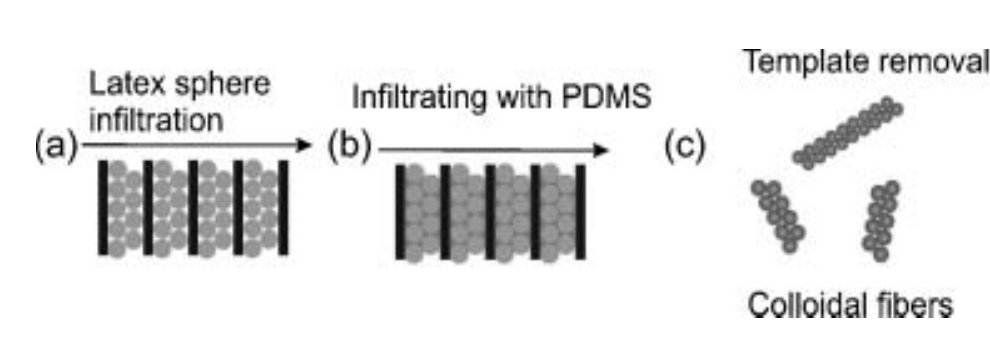
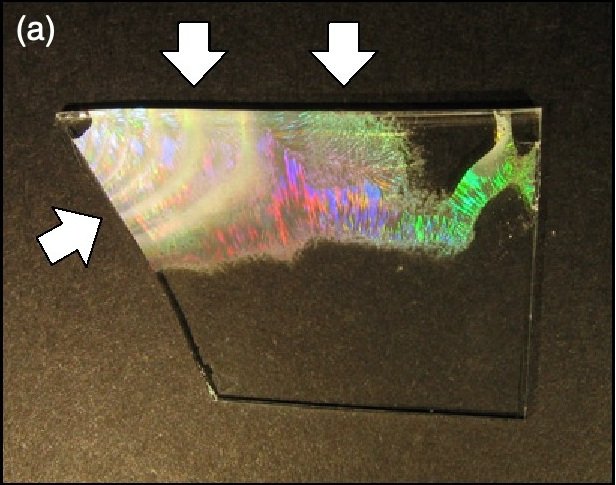
Polystyrene colloids infiltrate cylindrical pores in a macroporous silicon membrane and organise under radial confinement. Removing or retaining the surrounding matrix yields wire-like particle assemblies whose helicity and coordination depend on the pore-to-particle diameter ratio.
Simulations & fits
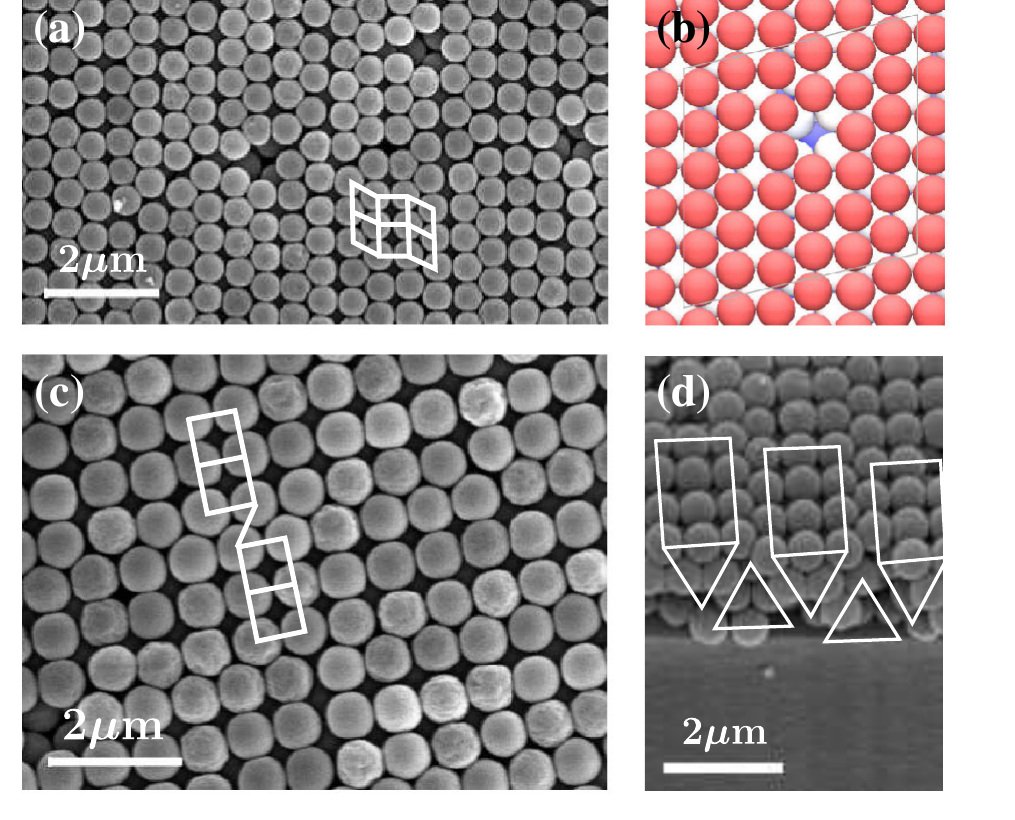
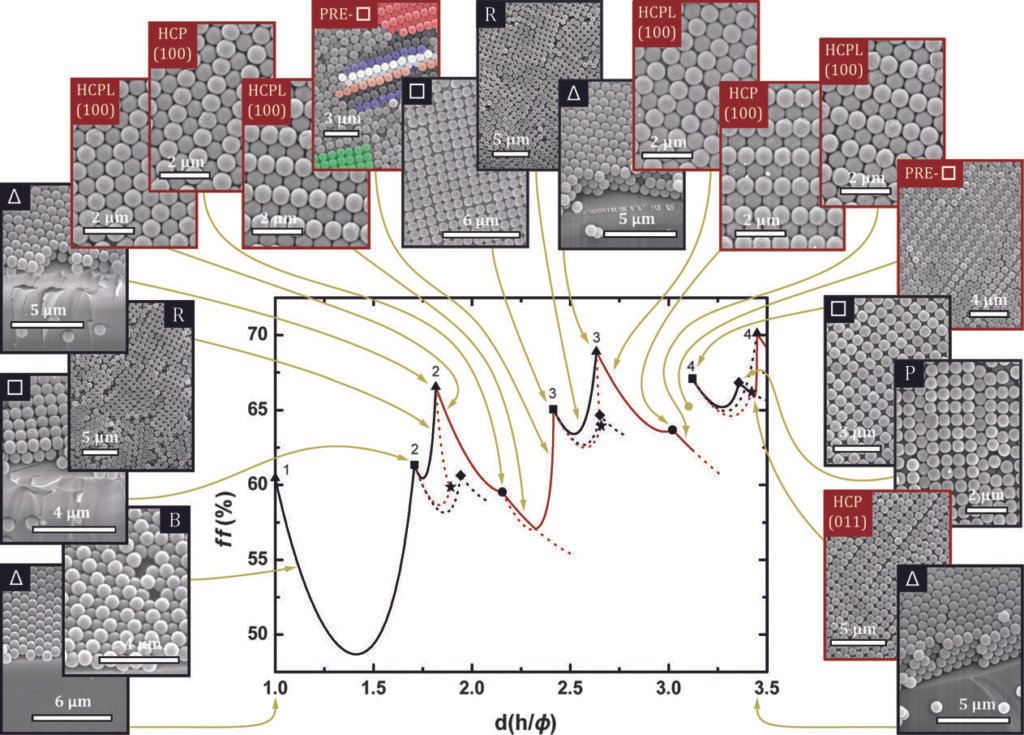
A confined-sphere interaction model includes geometry and electrostatic repulsion to reproduce non-close-packed zigzags and helical sequences. Varying the effective confinement ratio connects individual observed wires with the corresponding packing family.
Characterization
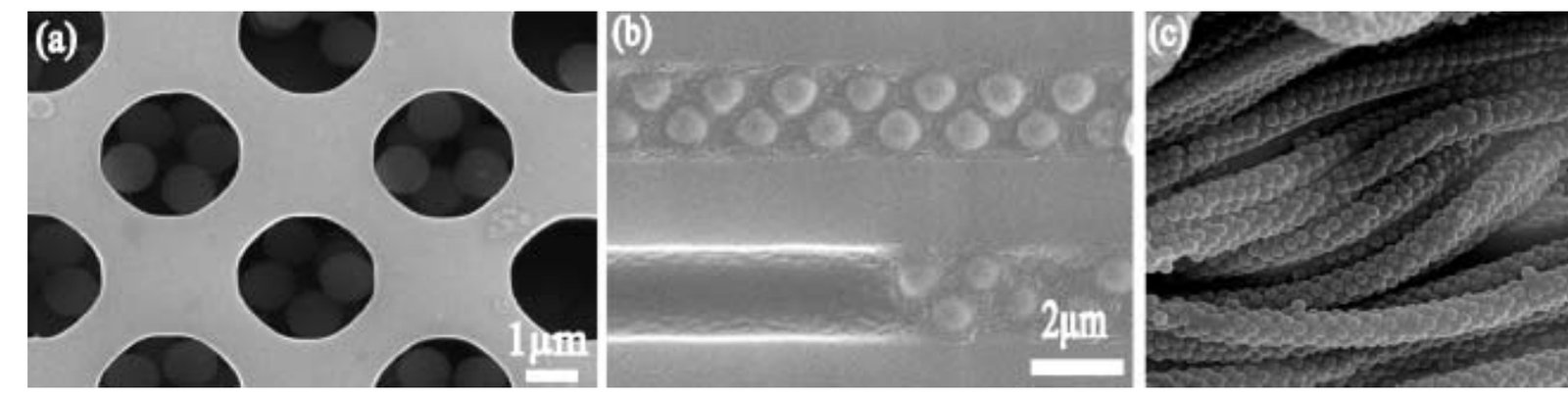
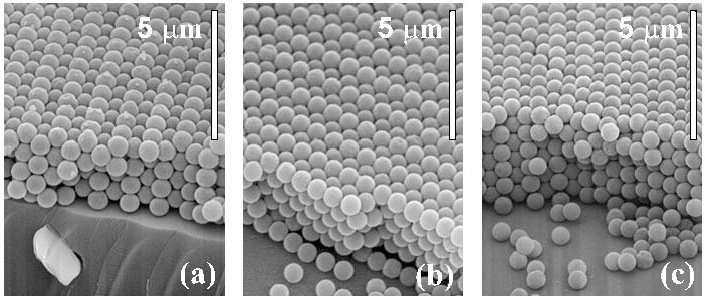
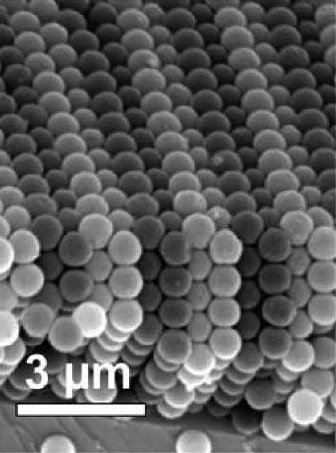
Cross-sectional and released-wire SEM images expose particle order inside the pores and along isolated strands. The comparison reveals structures hidden from a top view and tests whether the same sequence persists after the silicon template is removed.