Research · Publication & note
Colloidal Crystal Thin Films Grown into Corrugated Surface Templates - Notes
Journal article
Published abstract
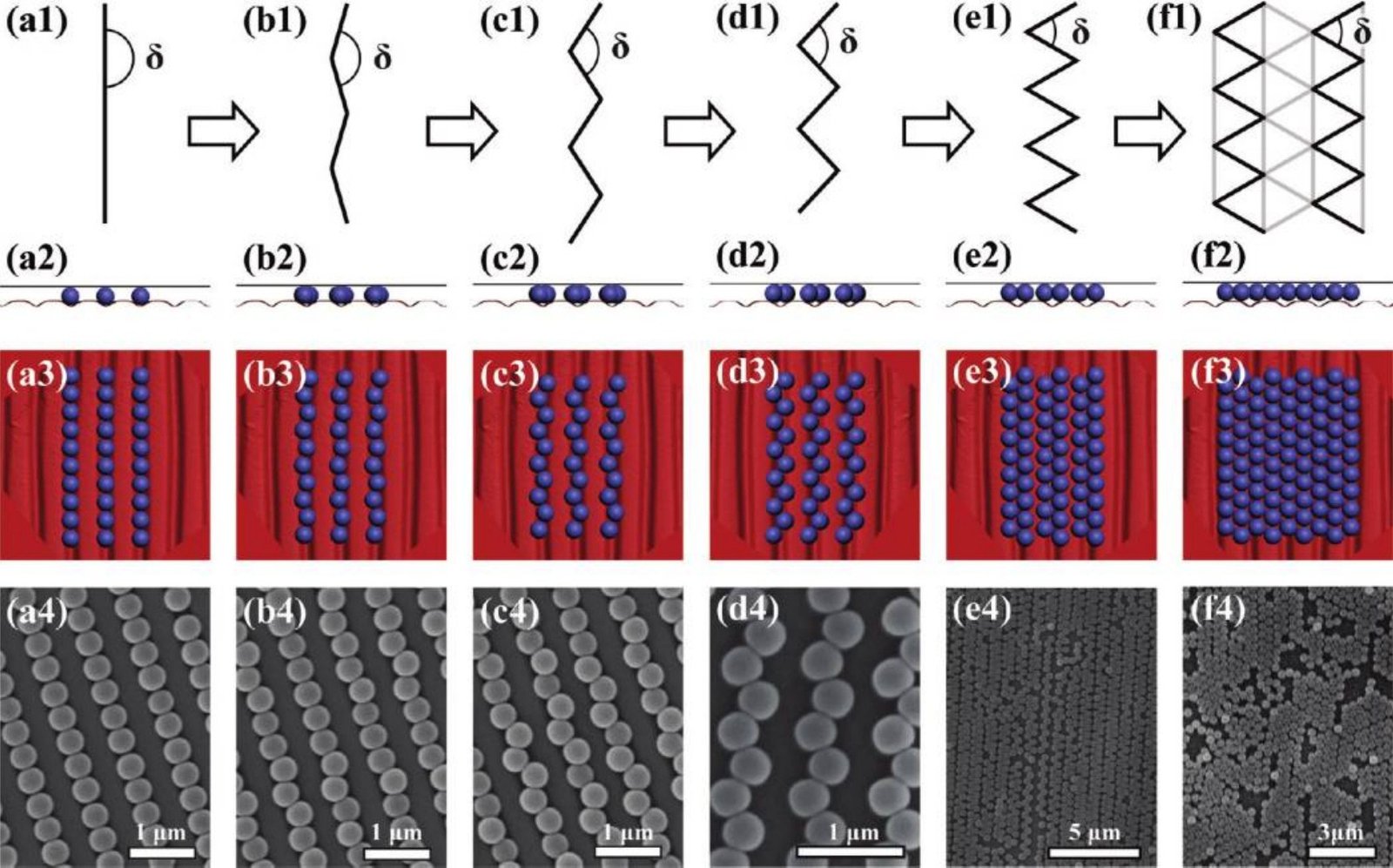
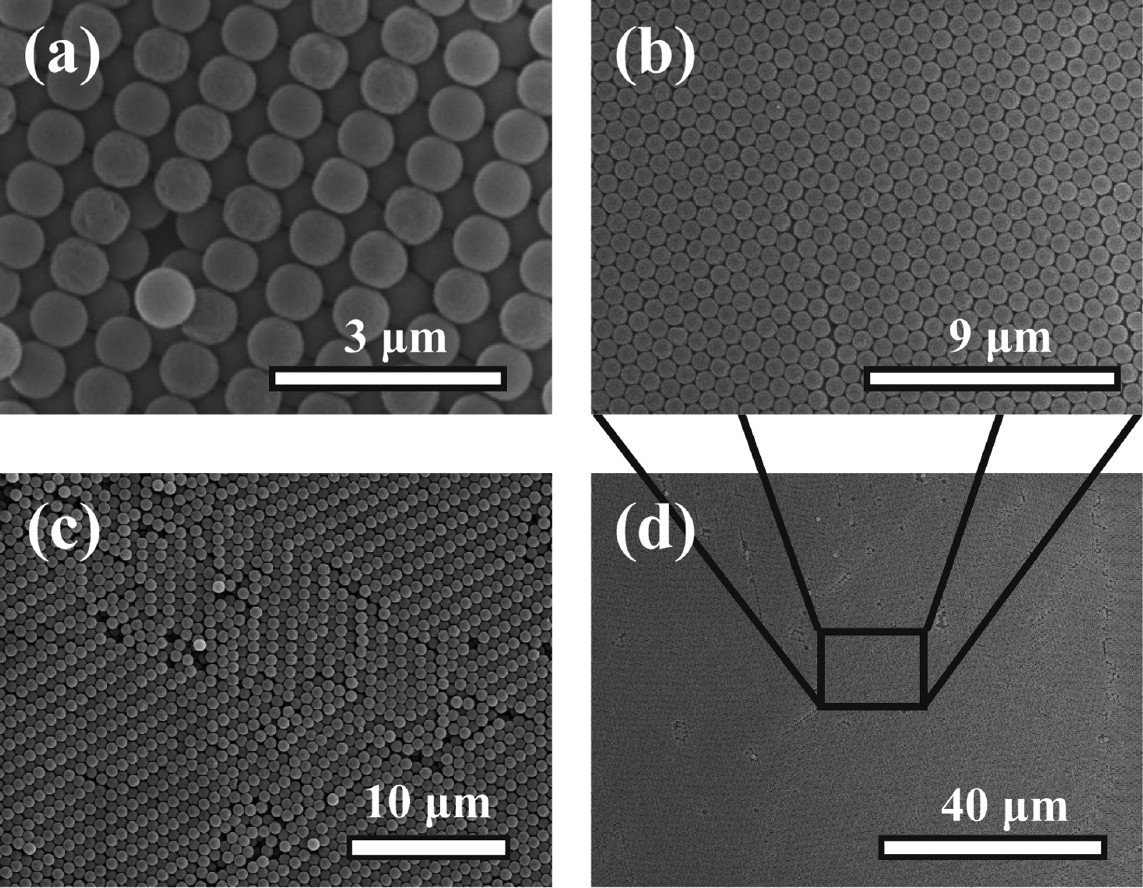
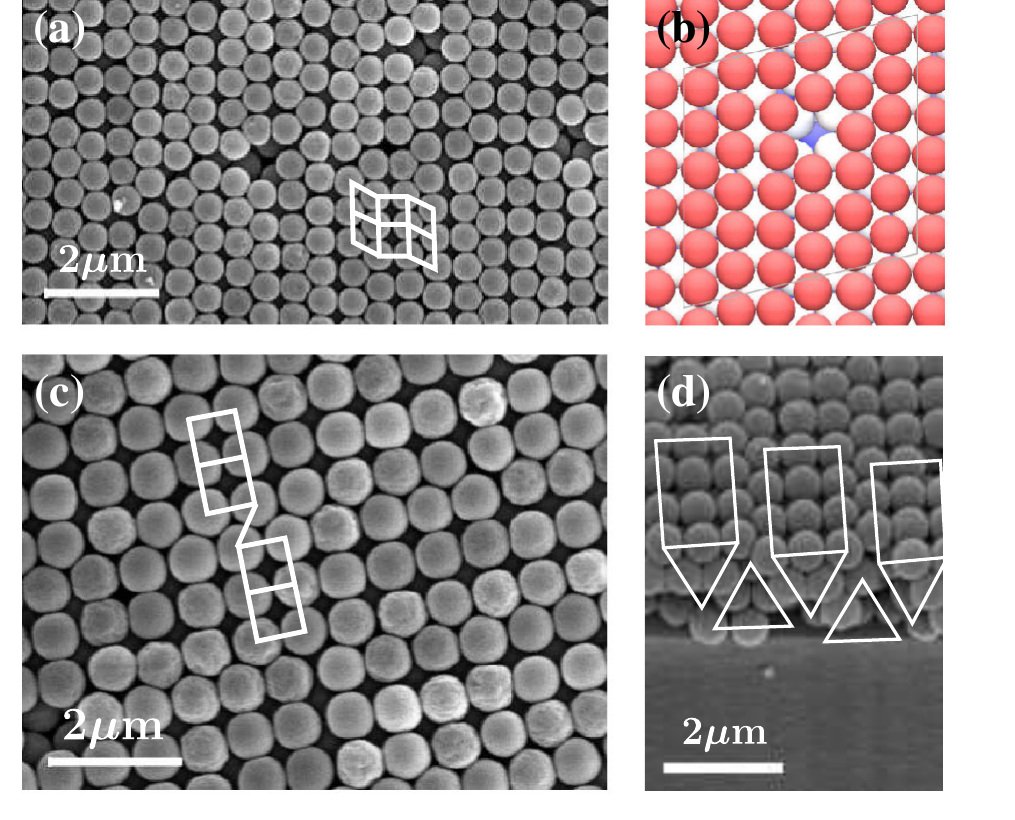
The influence of patterned surfaces on the formation of one- and two-dimensional colloidal crystals is analyzed. We have used the corrugated surface of a digital versatile disc (DVD) for template surface processing. When the sphere diameter is on the order of the groove width of patterned substrates, a rich variety of particle decorations appear. However, if particle size is much larger than template patterns, large domains of particle ordering are formed.
Figures
From F. Ramiro-Manzano et al., Langmuir 26(7), 4559-4562 (2010), DOI 10.1021/la904396m. Reproduced by the authors under ACS author reuse rights.
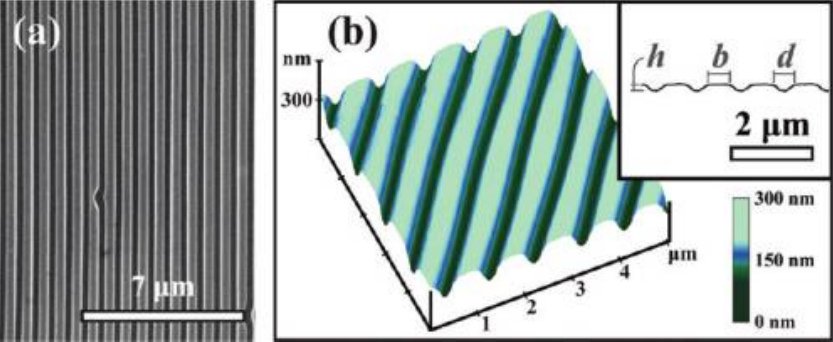
From F. Ramiro-Manzano et al., Langmuir 26(7), 4559-4562 (2010), DOI 10.1021/la904396m. Reproduced by the authors under ACS author reuse rights.
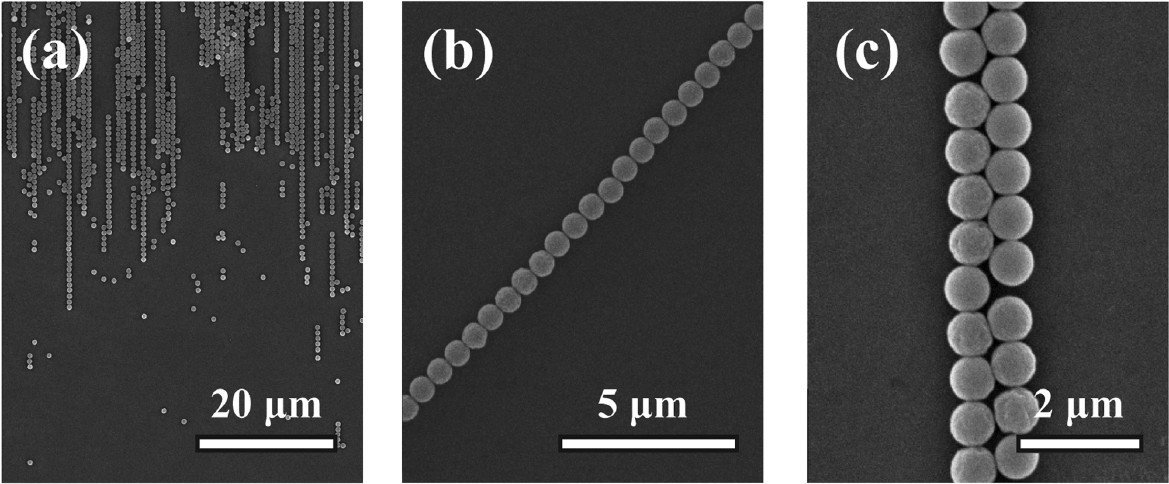
From F. Ramiro-Manzano et al., Langmuir 26(7), 4559-4562 (2010), DOI 10.1021/la904396m. Reproduced by the authors under ACS author reuse rights.
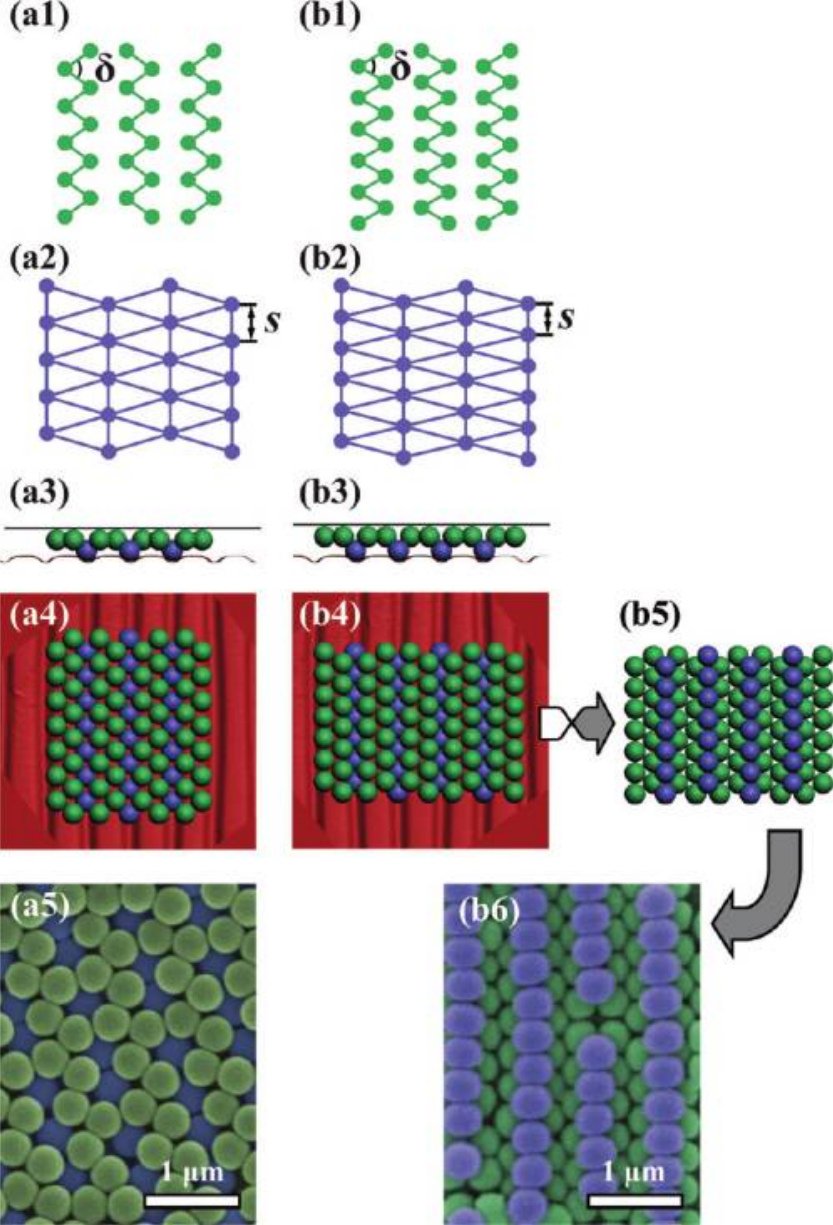
From F. Ramiro-Manzano et al., Langmuir 26(7), 4559-4562 (2010), DOI 10.1021/la904396m. Reproduced by the authors under ACS author reuse rights.
From F. Ramiro-Manzano et al., Langmuir 26(7), 4559-4562 (2010), DOI 10.1021/la904396m. Reproduced by the authors under ACS author reuse rights.
How to cite
Article access and reuse
The published article is available from ACS Publications. ACS permits authors to reuse their own figures on personal or institutional websites for non-commercial purposes when the published article is properly cited. The five figures below were extracted as complete compositions from the local article PDF and have not been enlarged or modified.
Related publications

Research fields
Bottom-up
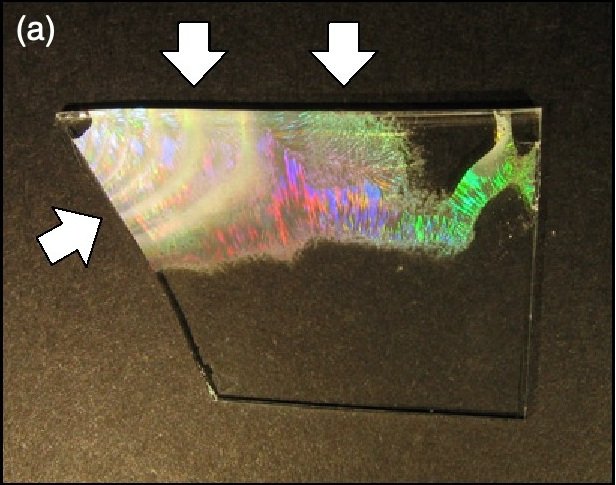
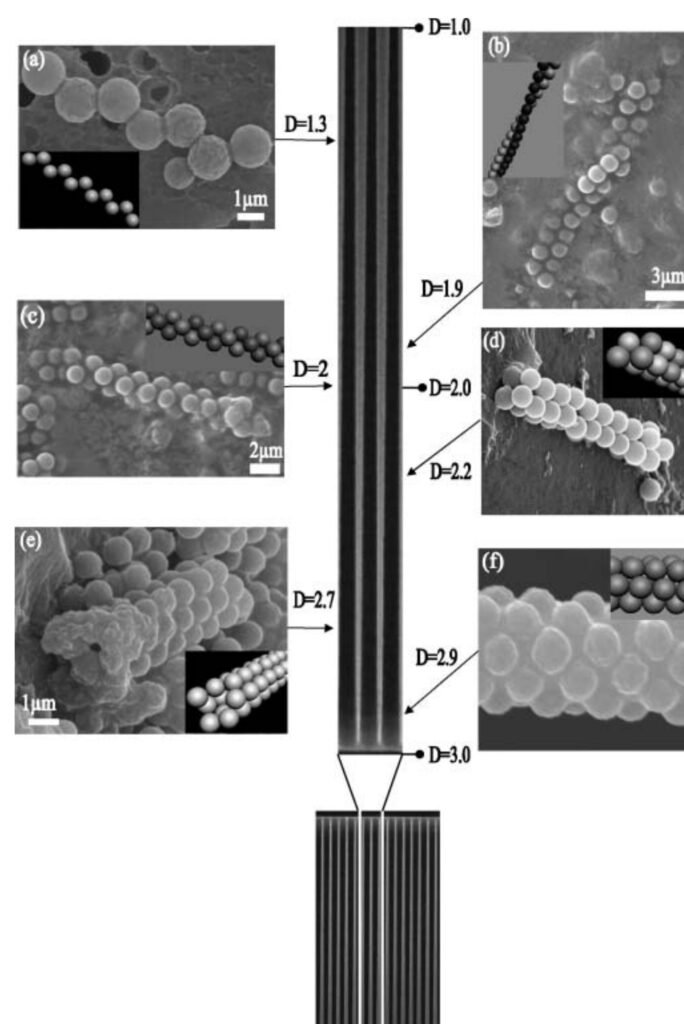
Colloidal spheres crystallise in wedge cells whose confining plate carries the spiral groove pattern replicated from a recordable disc. The corrugation directs rows, strips and multilayer arrangements that do not appear on a flat substrate.
Simulations & fits
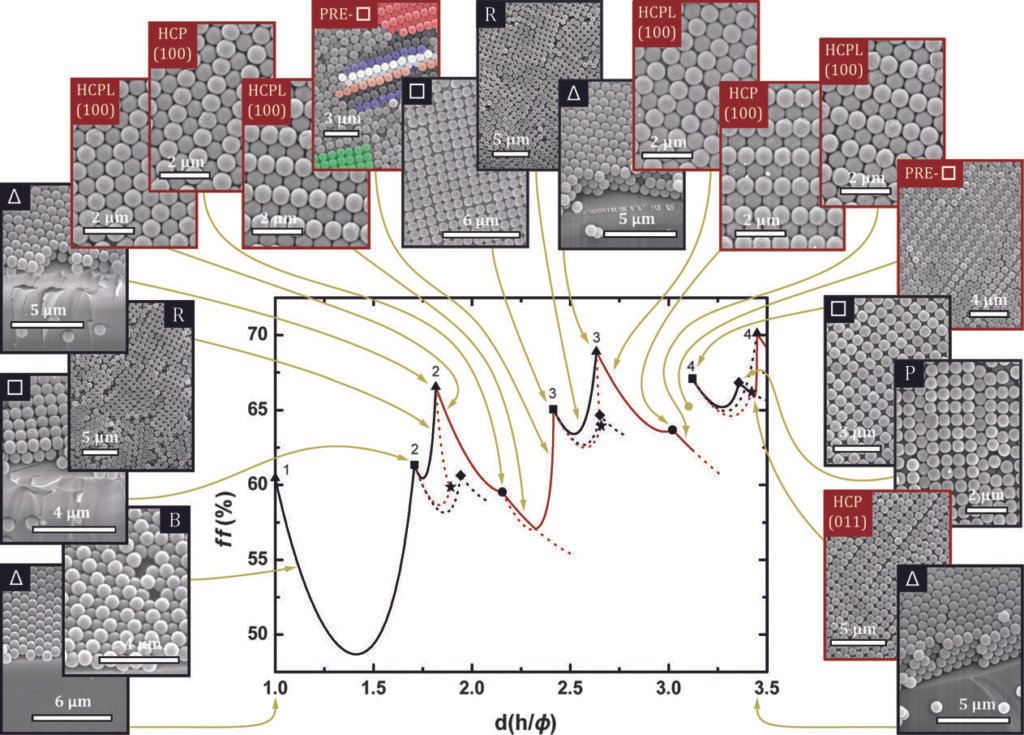
Sphere-packing models reconstruct how successive layers occupy grooves and lands as the local cell thickness increases. The geometrical comparison explains the observed transitions between linear chains, offset rows and extended three-dimensional order.
Characterization
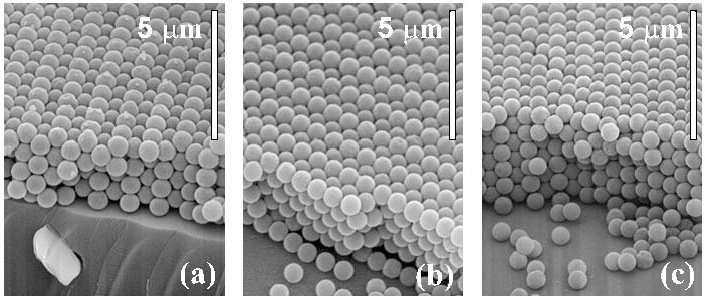
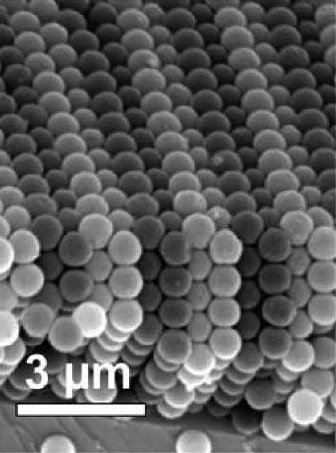
AFM measures the template profile and SEM records both surface and edge views of the assembled particles. Registering these images with the groove direction establishes which structures are imposed by the substrate and which arise from confinement alone.
RESEARCH TOPICS
 InterferenceThe periodic grooves of a commercial DVD act as a one-dimensional template whose width competes with particle diameter. The observed order is therefore an interference between two geometric periodicities: colloid packing and substrate relief.
 MaterialsSEM images show that small particles decorate individual grooves in one- and two-dimensional arrangements, while larger particles average over the pattern and preserve long-range order despite local size-dispersion defects. The result provides a low-cost route to templated colloidal films and identifies the particle-to-groove ratio as the controlling design parameter.