Research · Publication & note
Faceting and Commensurability in Crystal Structures of Colloidal Thin Films - Notes
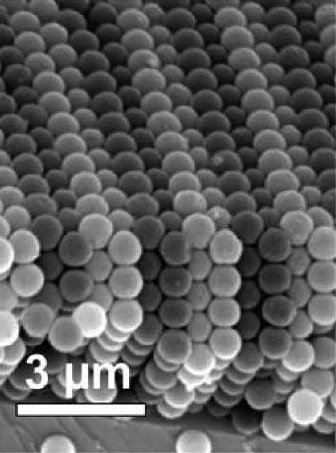
Research publication
Published abstract
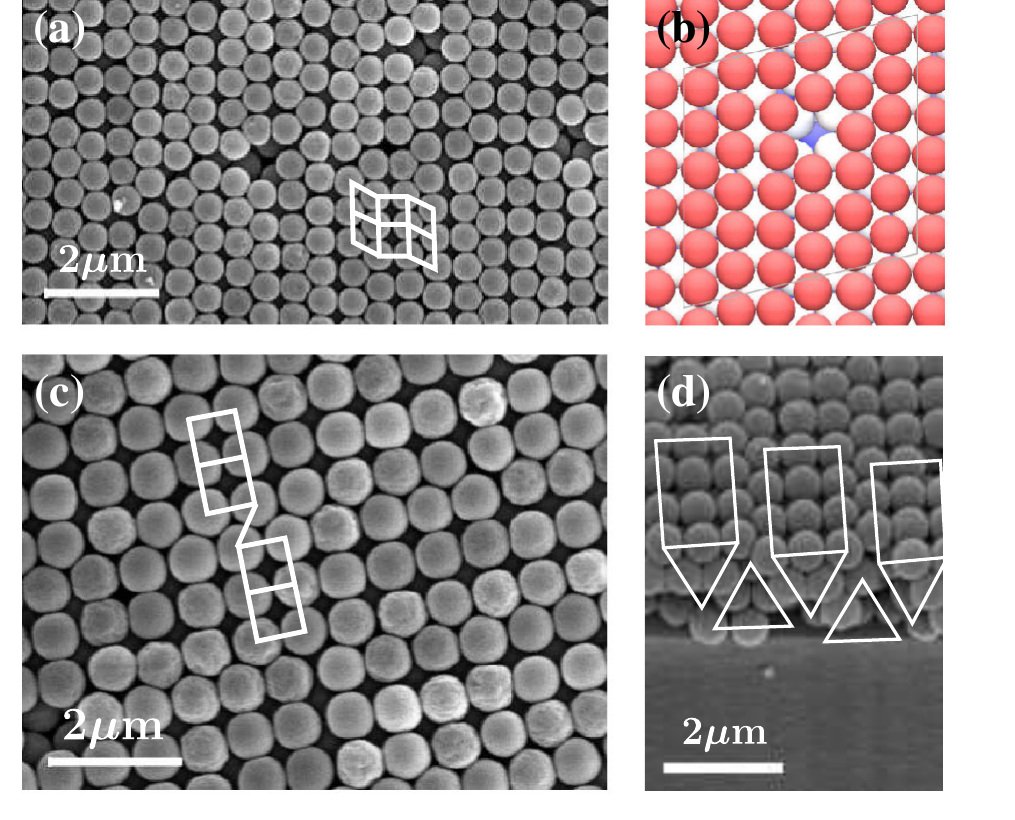
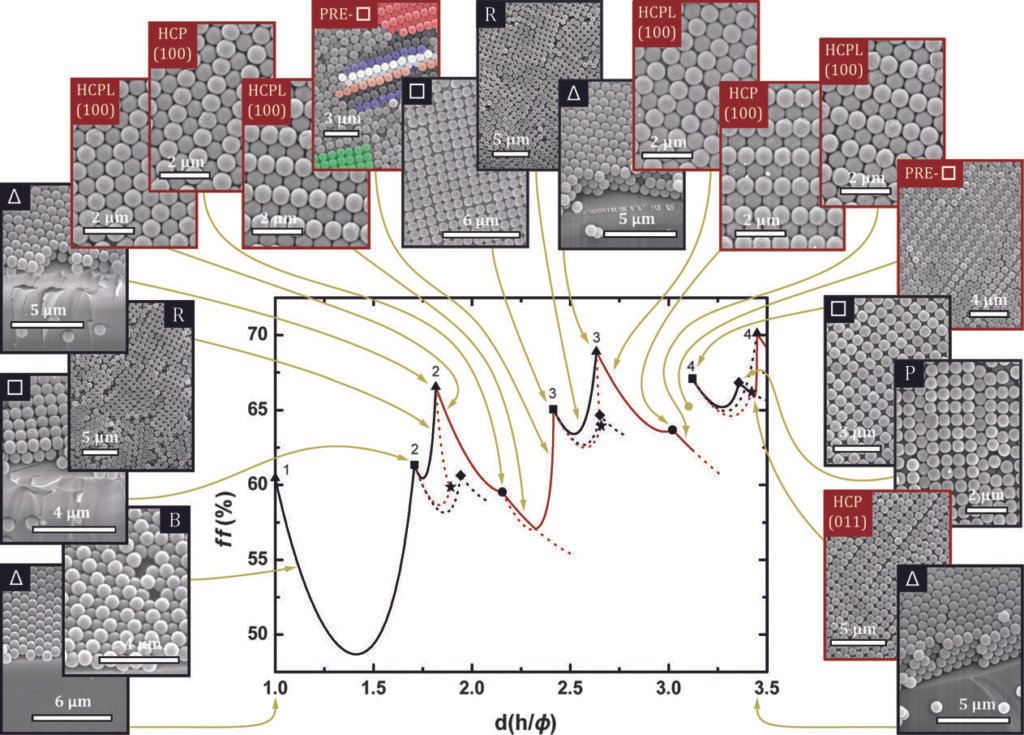
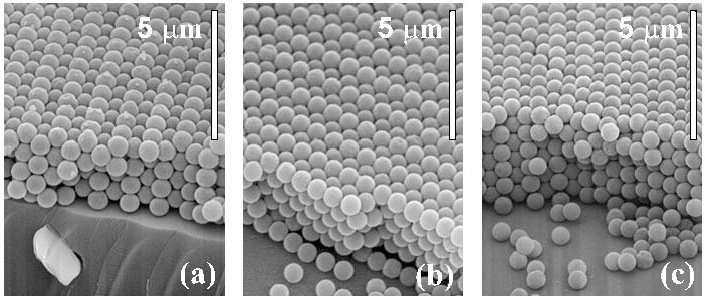
This Letter investigates the influence of finite size effects on the particle arrangement of thin film colloidal crystals. A rich variety of crystallographic faceting with large single domain microcrystallites is shown. Optical reflectance experiments together with scanning electron microscopy permit the identification of the crystal symmetry and the facet orientation, as well as the exact number of monolayers. When the cell thickness is not commensurable with a high symmetry layering, particles arrange themselves in a periodic distribution of (111)- and (100)-orientated face centered cubic (fcc) microcrystallites separated by planar defects. These structures can be described as a fcc ordering orientated along a vicinal surface, modified by a periodic distribution of fcc (111) stacking faults.
Figures
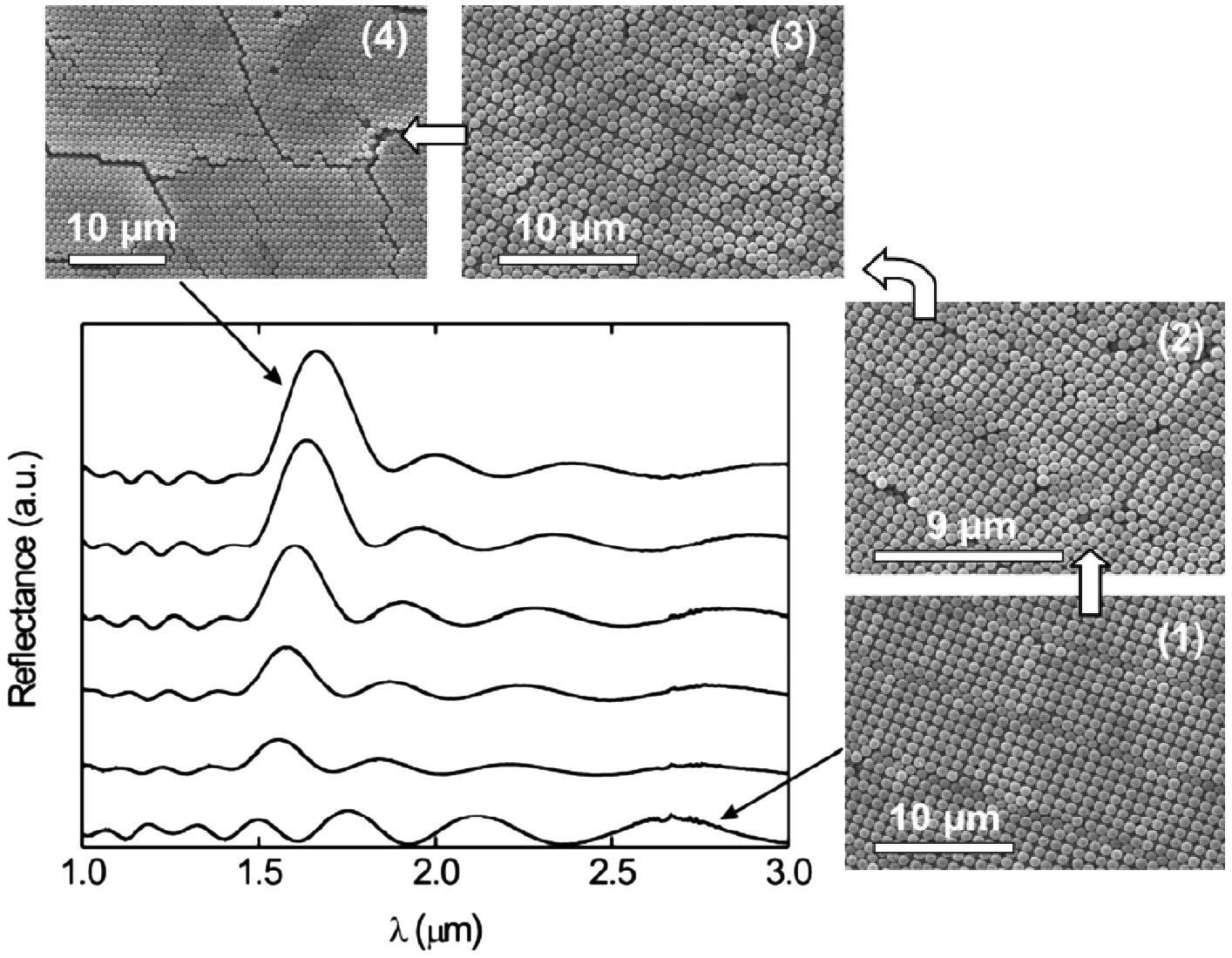
Source: F. Ramiro-Manzano et al., Phys. Rev. Lett. 97, 028304 (2006); reproduced on an author's personal website.
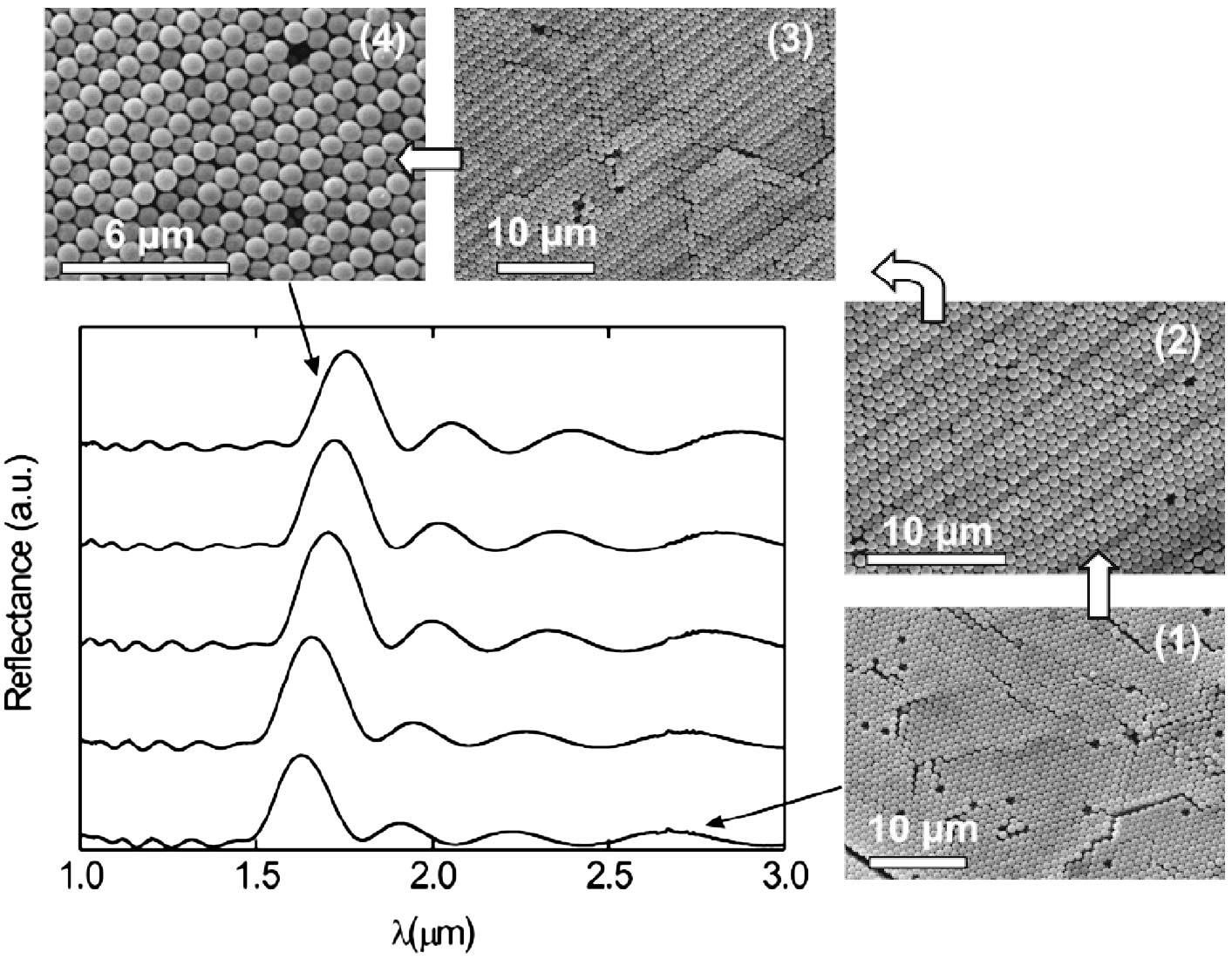
Source: F. Ramiro-Manzano et al., Phys. Rev. Lett. 97, 028304 (2006); reproduced on an author's personal website.
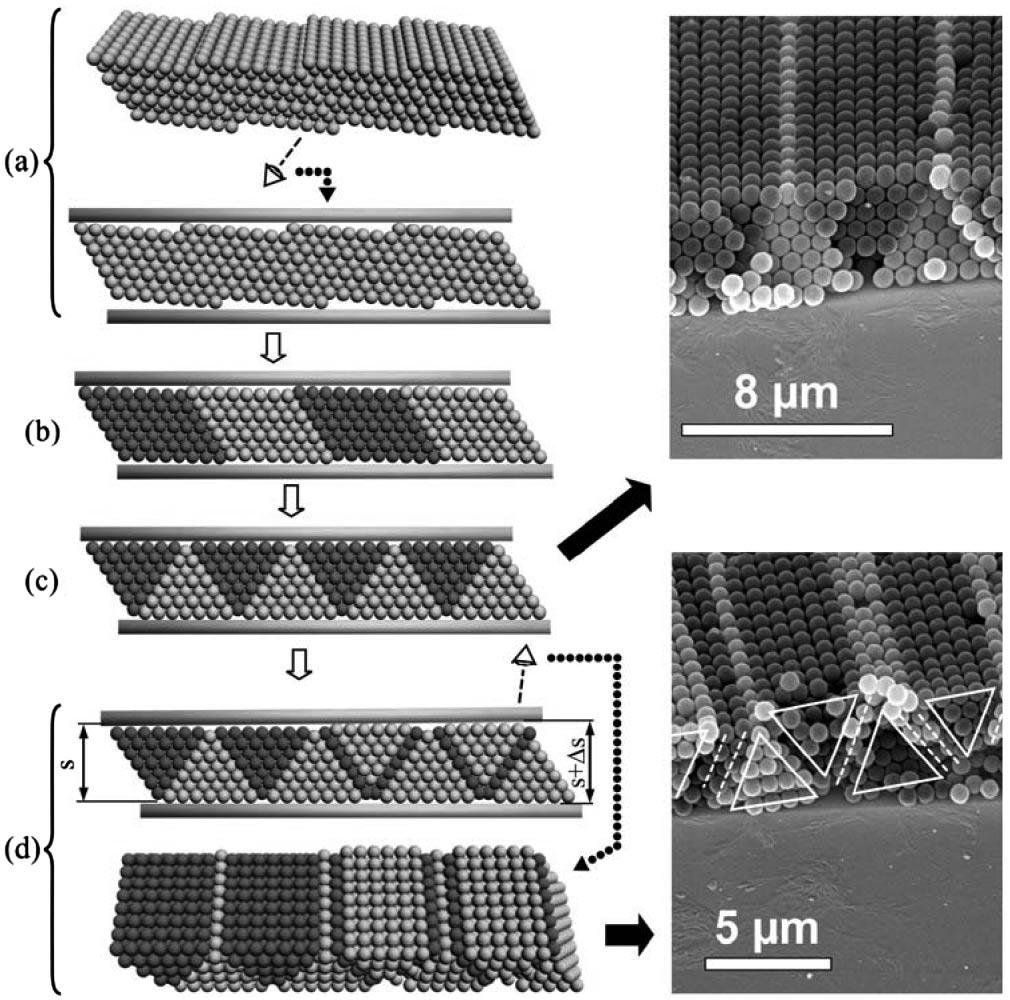
Source: F. Ramiro-Manzano et al., Phys. Rev. Lett. 97, 028304 (2006); reproduced on an author's personal website.
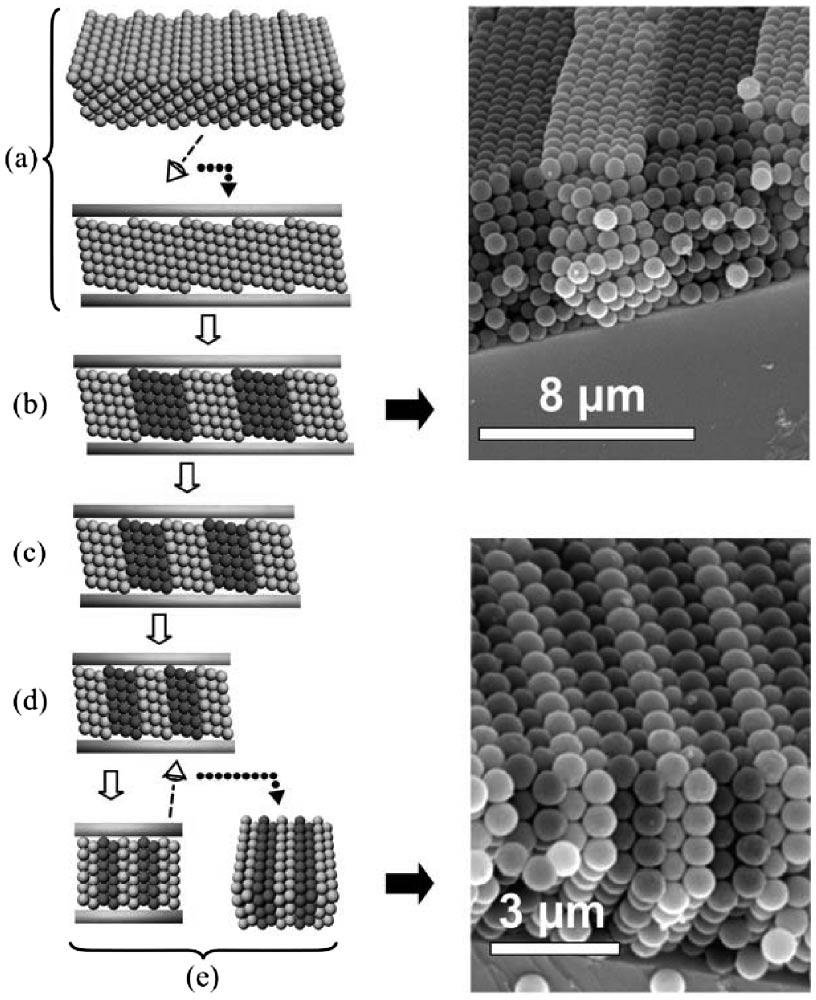
Source: F. Ramiro-Manzano et al., Phys. Rev. Lett. 97, 028304 (2006); reproduced on an author's personal website.
How to cite
Article access and reuse
APS permits authors to reuse article material on their personal website with full citation. The Version of Record remains available through Physical Review Letters.
Related publications

Research fields
Bottom-up
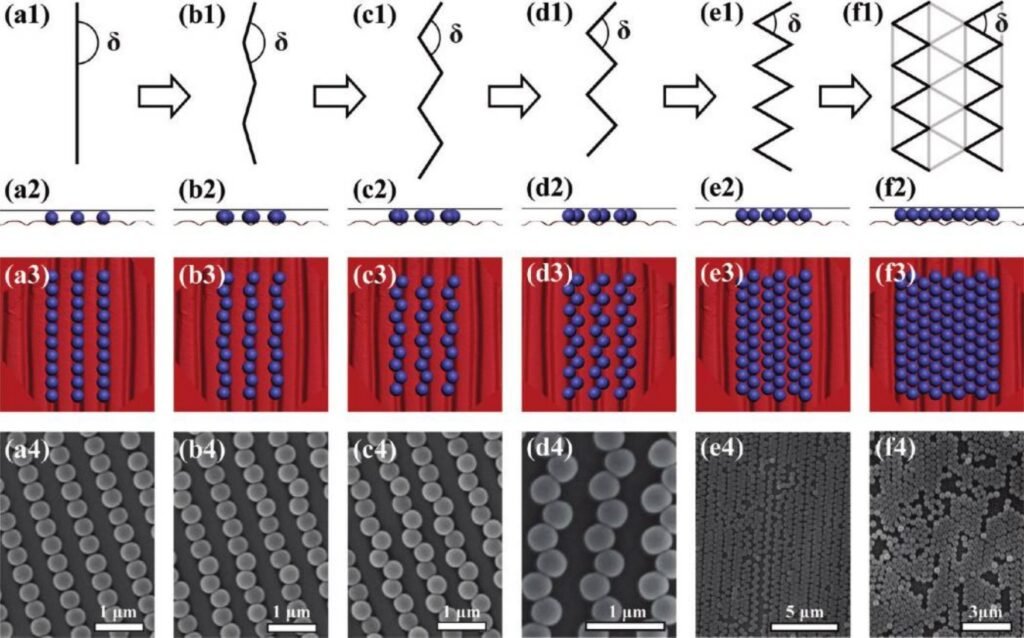
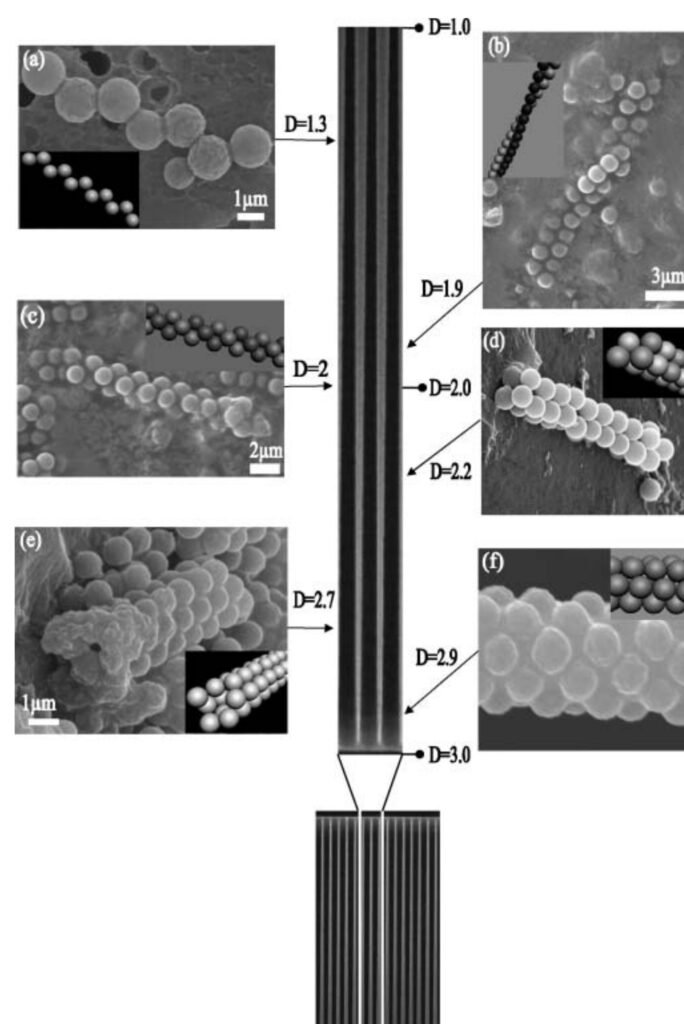
Colloidal spheres assemble under wedge confinement into films whose preferred orientation changes with layer number. When the gap is incommensurate with an ideal facet, the crystal introduces prismatic domains, terraces and periodic stacking faults to preserve dense packing.
Simulations & fits
Geometrical models and filling-fraction arguments reconstruct the fcc(100), fcc(111) and intermediate prismatic arrangements. They explain how the number and spacing of stacking faults evolve as the cell thickness moves between commensurate states.
Characterization
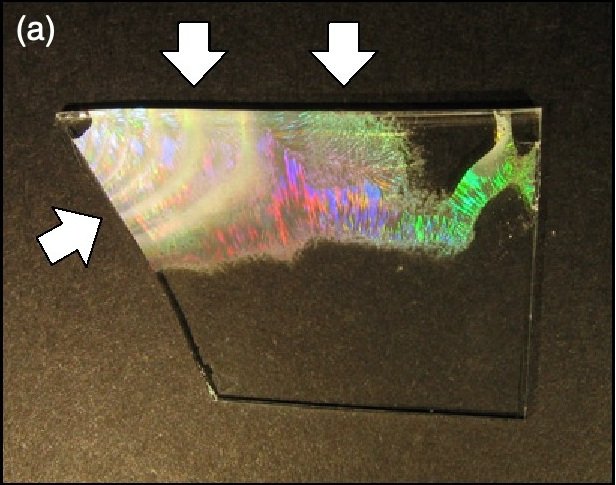
Position-dependent reflectance spectra are matched with top and cleaved-edge SEM images. This correlation assigns each spectral region to a three-dimensional facet and distinguishes a true structural transition from a gradual optical shift caused only by thickness.