Research · Publication & note
Wavelength Dependence of a Vertically Coupled Resonator-Waveguide System - Notes
Journal of Lightwave Technology · Journal article · 1 December 2016
Published abstract
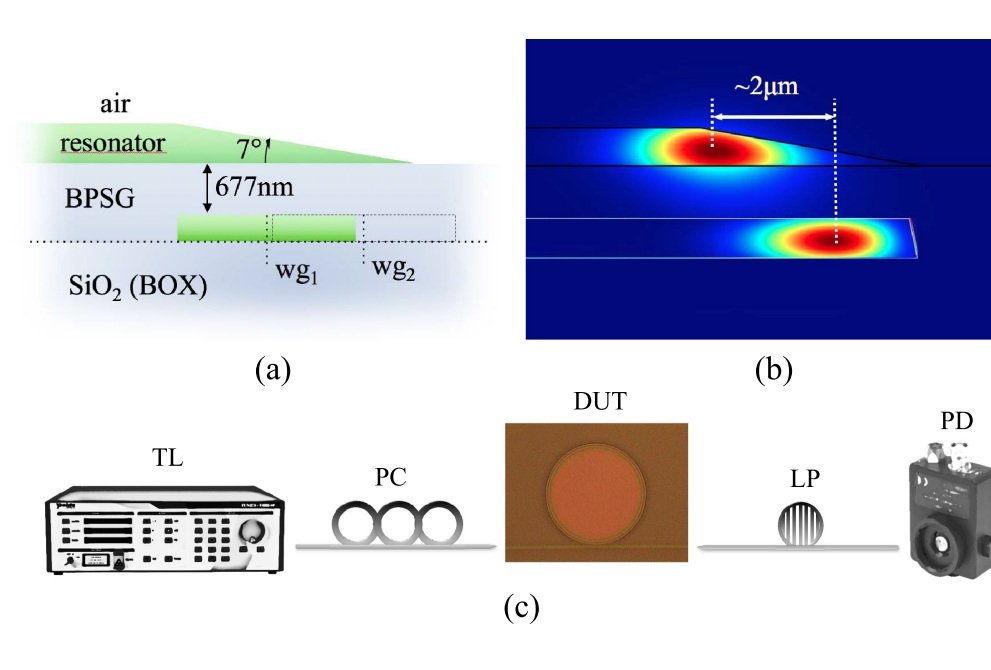
Coupling of light to and from a microdisk resonator is a crucial step for the integration of this photonic structure in a photonic integrated circuit. However, the most common lateral coupling scheme, based on a point contact with a coplanar bus waveguide, suffers from strong wavelength dependence. This is a limiting factor for exciting efficiently the resonant modes in a broad spectral region. In the present paper, we propose a solution based on a different configuration, known as vertical coupling configuration, where a bus waveguide is buried below the micro disk. We demonstrate theoretically and experimentally that the long interaction region provided by this geometry allows to extend the optimal coupling spectral range from IR to visible. This feature constitutes a remarkable advantage over the usual laterally coupled devices for many different applications, such as frequency conversion, allowing bandwidth limitations to be significantly diminished.
Figures
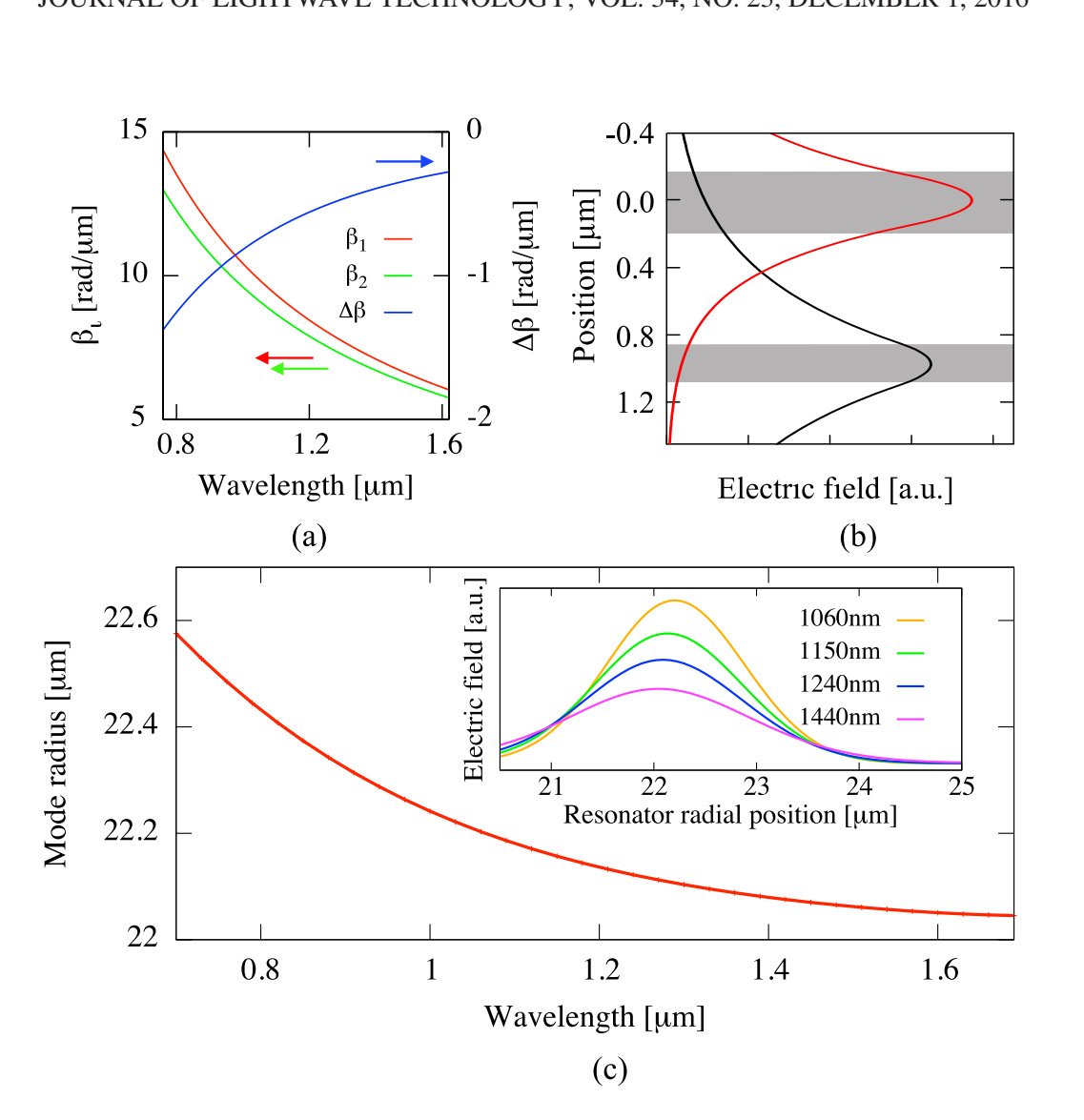
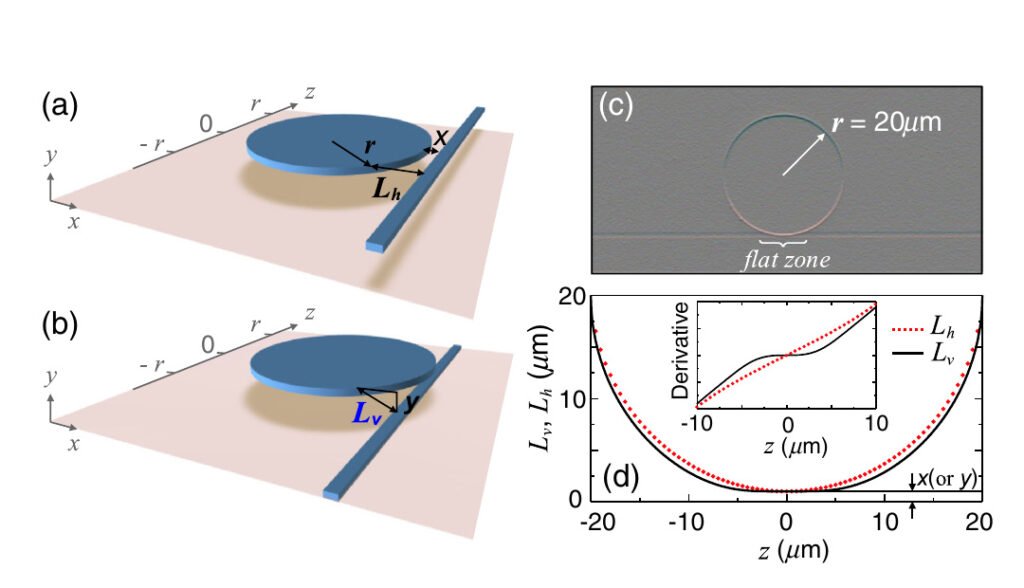
From F. Turri et al., Journal of Lightwave Technology 34(23), 5385-5393 (2016), DOI 10.1109/JLT.2016.2615331. © 2016 IEEE.
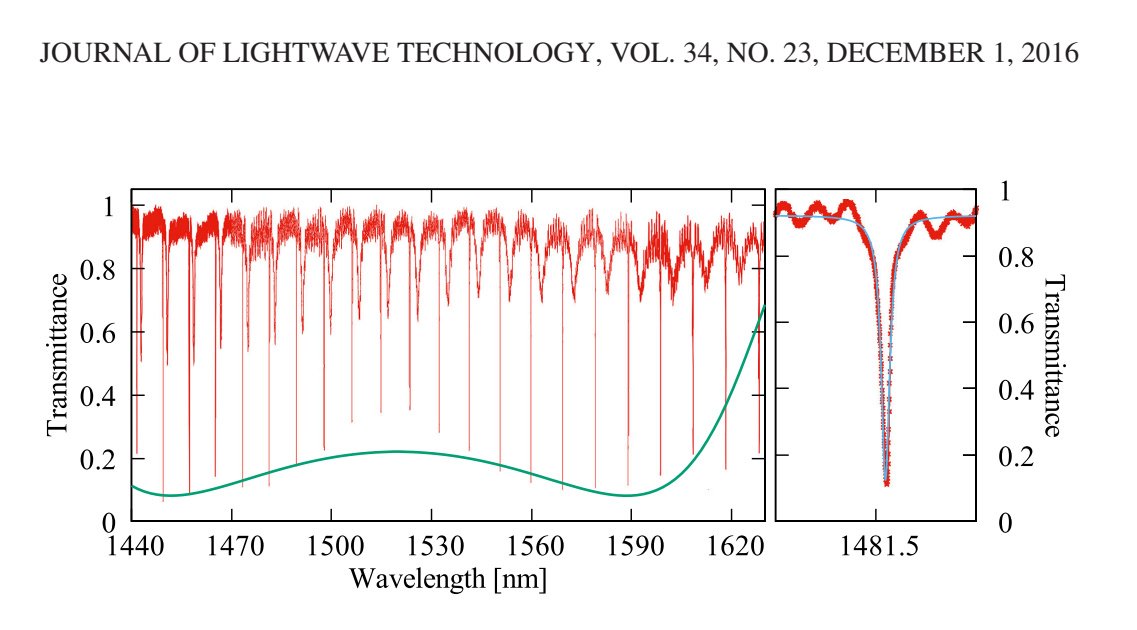
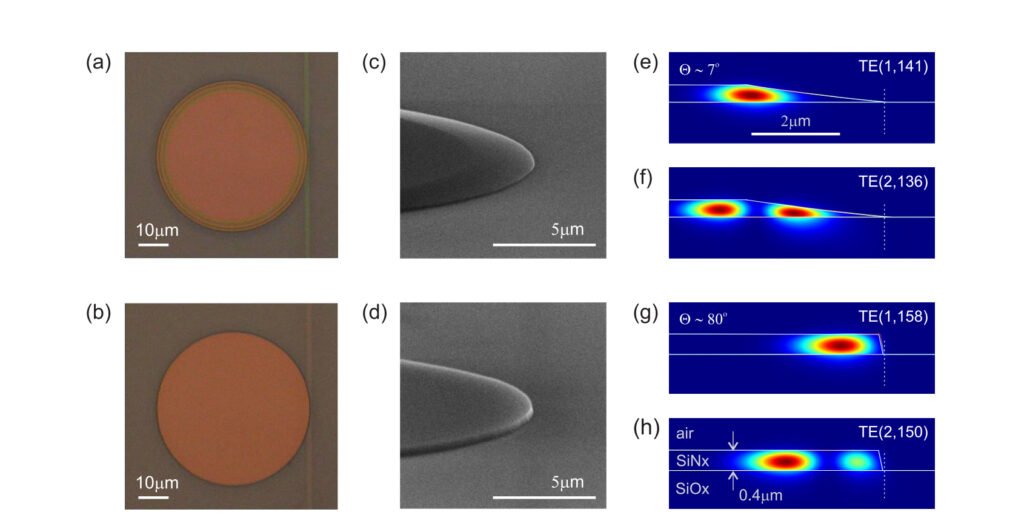
From F. Turri et al., Journal of Lightwave Technology 34(23), 5385-5393 (2016), DOI 10.1109/JLT.2016.2615331. © 2016 IEEE.
How to cite
Article access and reuse
This article was published under the standard IEEE copyright arrangement. IEEE permits authors to post the accepted article on a personal website with the DOI and prescribed copyright notice; the local file reviewed for this catalogue is the IEEE-published Version of Record and is therefore not hosted here. The selected figures below carry the complete article citation and IEEE copyright notice. Further republication or redistribution requires IEEE permission.
Related publications

Research fields
Top-down
A buried bus waveguide and a vertically separated wedge resonator are fabricated in different material planes. The extended coupling region is deliberately used to overcome the narrow spectral response of point-like lateral coupling.
Simulations & fits
An analytical oscillatory-coupling model is extended to include wavelength and is supported by finite-element mode calculations. It predicts repeated critical-coupling conditions as the phase relation between the waveguide and resonator modes changes across the visible and infrared.
Characterization
Broad spectral transmission measurements test devices with controlled vertical gaps and horizontal alignments. The observed sequence of coupling maxima and minima demonstrates simultaneous access to widely separated wavelength bands in the same integrated structure.
RESEARCH TOPICS
 CouplingBecause the buried guide runs parallel to the resonator over a finite length, its interaction cannot be represented by a wavelength-independent point coupler. Thus a fixed fabricated gap can provide very different loading across one spectral band, an effect that must be included when designing broadband integrated resonators.
 ResonatorsThe model combines effective resonator radius, intrinsic round-trip loss, flat interaction length, propagation-constant mismatch and wavelength-dependent modal overlap. The work connects a measured spectral oscillation to concrete geometry rather than treating coupling coefficients as freely fitted constants.