Research · Publication & note
Solar energy harvesting in photoelectrochemical solar cells - Notes
Research publication
Published abstract
Here we study different approaches for increasing energy harvesting in titania based photoelectrochemical solar (PES) cells. We study the light harvesting of PES cells when photonic crystal and photonic sponge architectures are used. We also report on the influence of the surface corrugation of the metal electrode on the harvesting of photocarriers in solar cells.
Figures
Source: I. Rodriguez et al., J. Mater. Chem. 17, 3205-3209 (2007). Reproduced with permission from the Royal Society of Chemistry.
Source: I. Rodriguez et al., J. Mater. Chem. 17, 3205-3209 (2007). Reproduced with permission from the Royal Society of Chemistry.
Source: I. Rodriguez et al., J. Mater. Chem. 17, 3205-3209 (2007). Reproduced with permission from the Royal Society of Chemistry.
Source: I. Rodriguez et al., J. Mater. Chem. 17, 3205-3209 (2007). Reproduced with permission from the Royal Society of Chemistry.
Source: I. Rodriguez et al., J. Mater. Chem. 17, 3205-3209 (2007). Reproduced with permission from the Royal Society of Chemistry.
Source: I. Rodriguez et al., J. Mater. Chem. 17, 3205-3209 (2007). Reproduced with permission from the Royal Society of Chemistry.
How to cite
Article access and reuse
RSC author-reuse terms permit authors to reuse their own figures with the prescribed acknowledgement. No publisher PDF is hosted; the definitive journal article is linked above.
Related publications
Research fields
Bottom-up
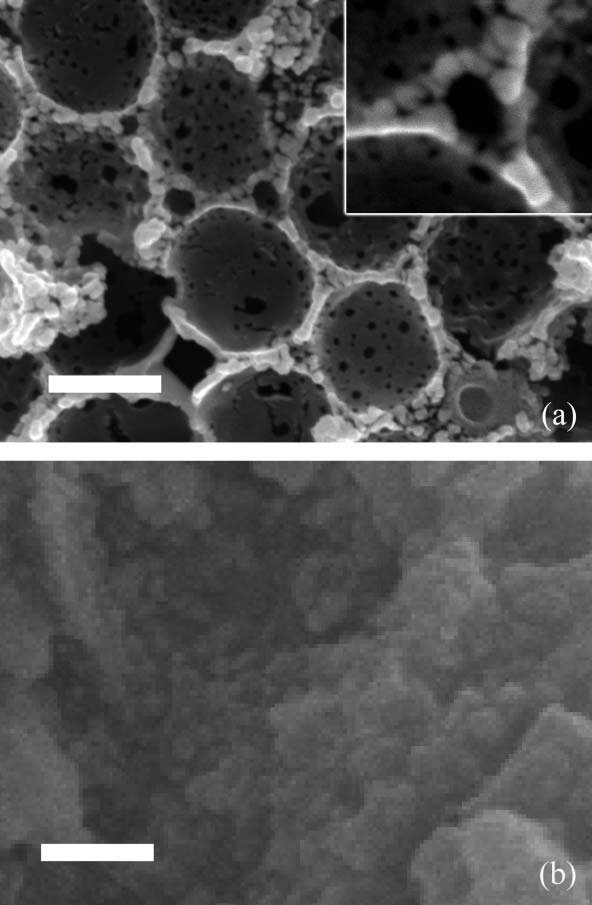
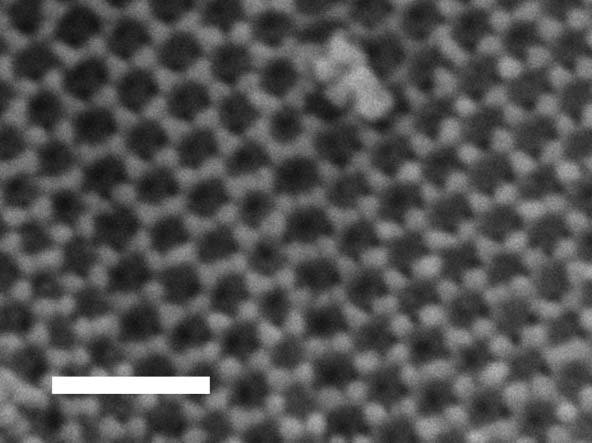
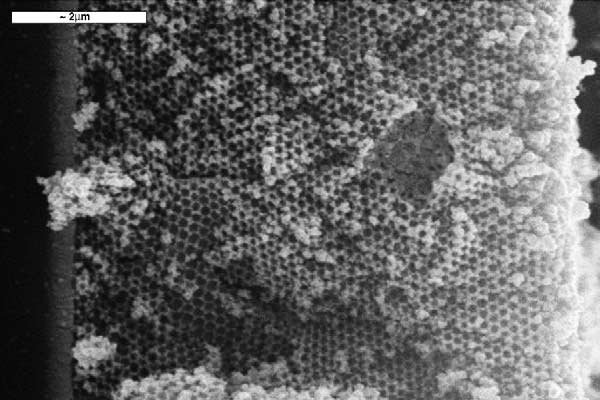
Nanoparticulate TiO₂ is organised as inverse opals and hierarchical photonic sponges before being assembled into dye-sensitised photoelectrochemical cells. Reference electrodes with compact particle packing keep the semiconductor chemistry constant while changing the optical architecture.
Characterization
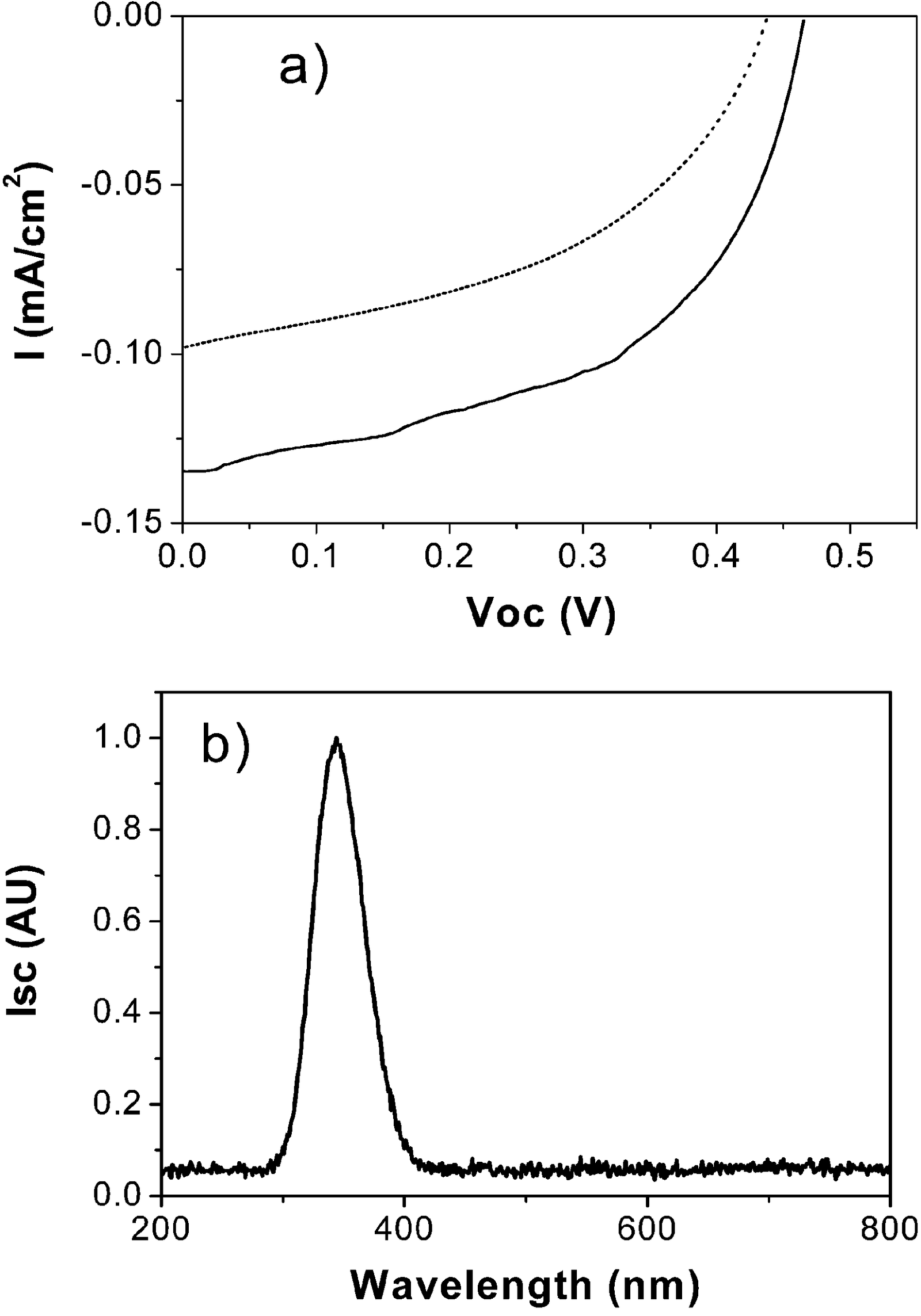
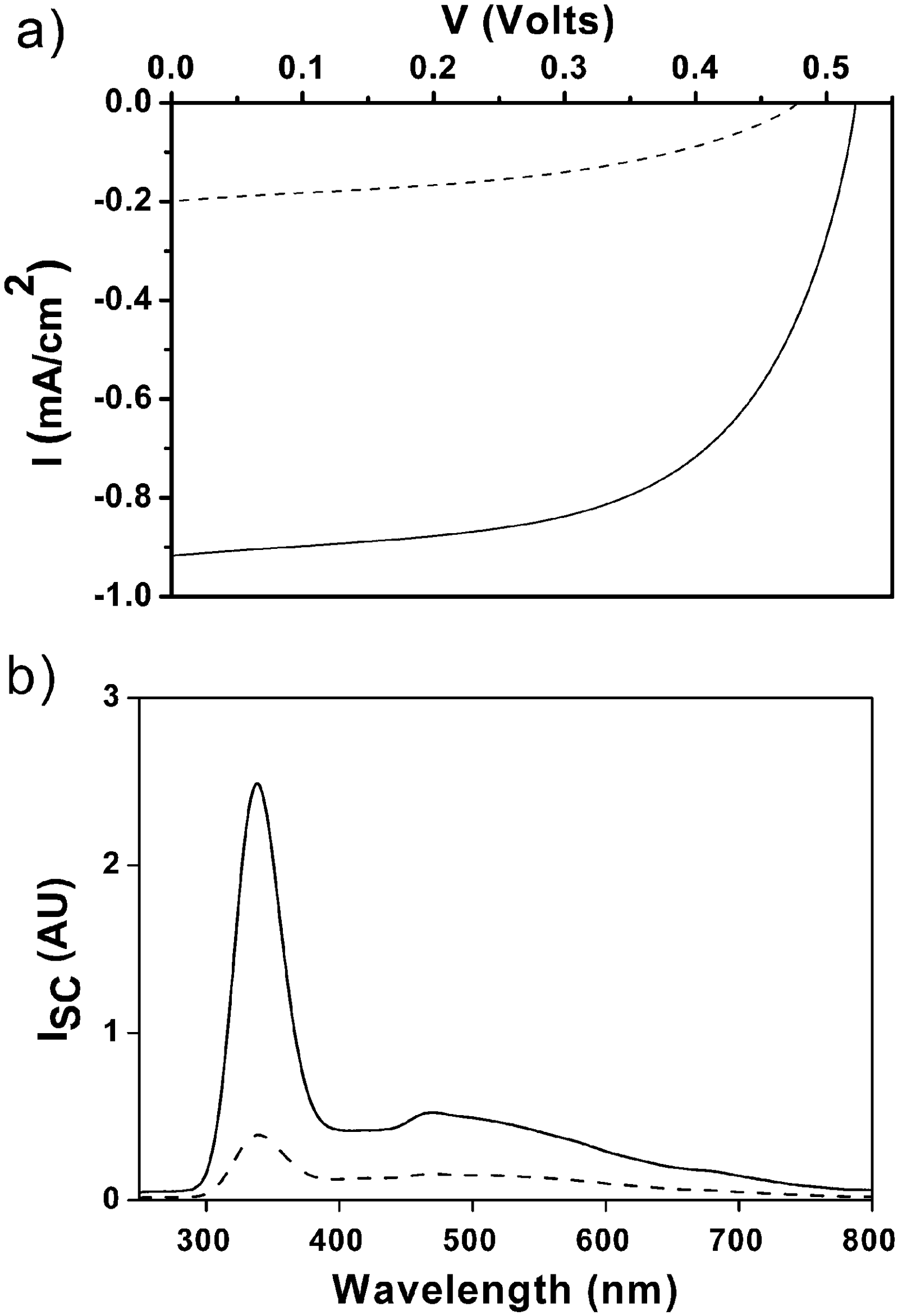
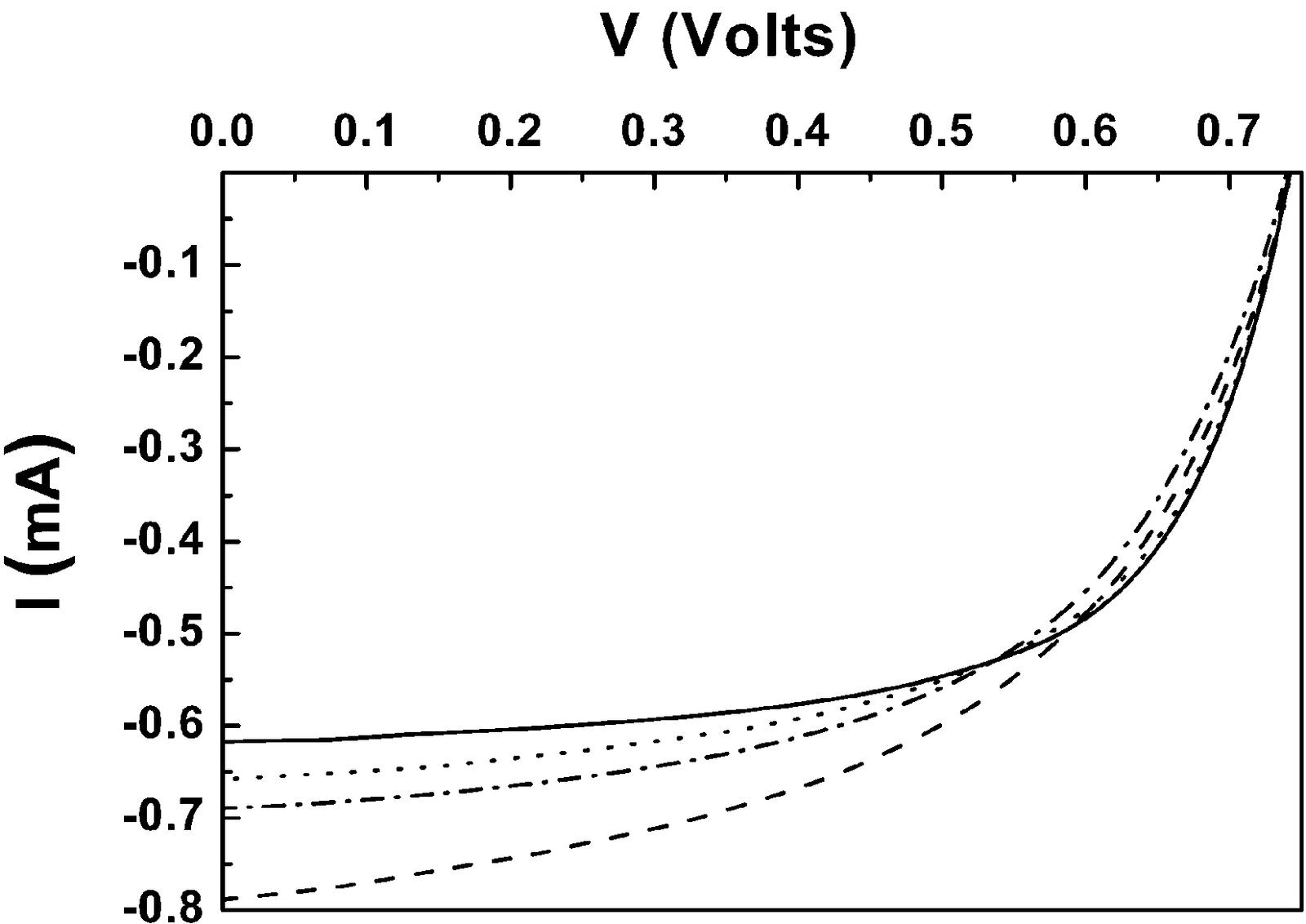
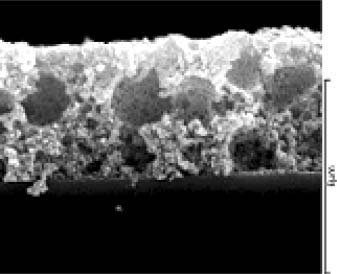
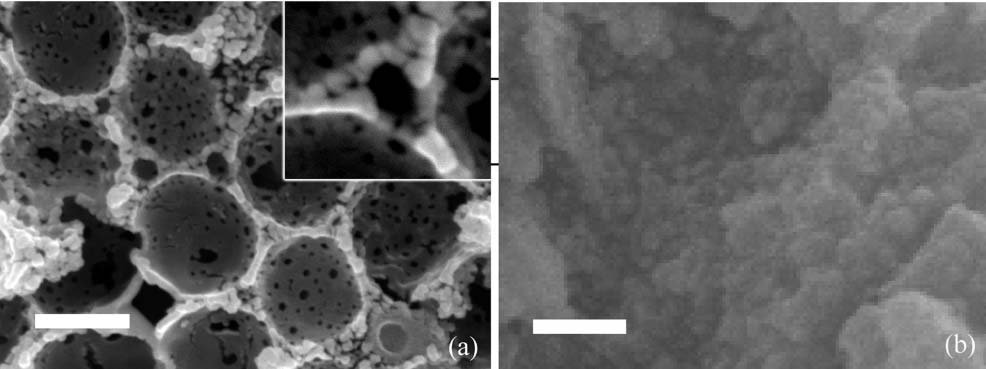
SEM, optical spectra and current-voltage curves compare pore hierarchy, light harvesting and photovoltaic output. The measurements show that the disordered sponge can outperform the periodic inverse opal because multiple scattering raises absorption without depending on a narrow photonic stop band.
RESEARCH TOPICS
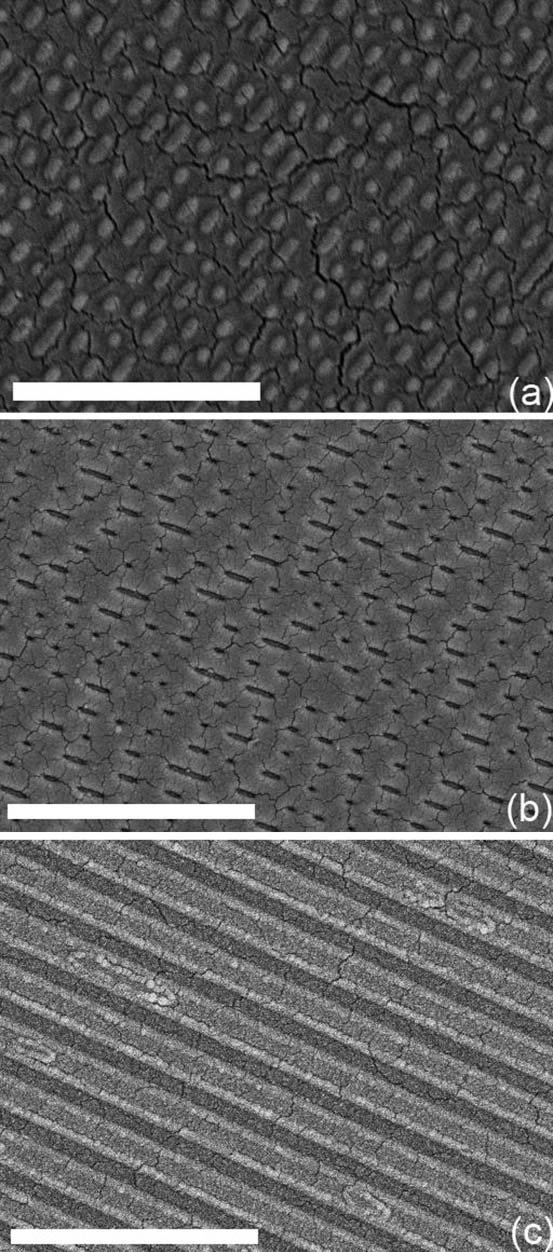
 HarvestingThe paper compares three routes to improve dye-sensitised TiO2 cells: an ordered inverse opal, a broadband photonic sponge and corrugation of the collecting metal electrode. Corrugating the electrode addresses a different bottleneck by increasing metal-semiconductor contact and shortening the path that photocarriers must travel before collection.
 InterferenceThe ordered inverse opal uses Bragg interference and reduced group velocity near its photonic stop-band edge, so enhancement is spectrally selective. The article therefore tests two distinct optical mechanisms rather than treating every porous TiO2 electrode as the same “light-trapping” structure.
 MaterialsThe ordered electrode is an approximately 8 μm TiO2 inverse opal, while the sponge is templated from a 23 μm random mixture of latex spheres with diameters 1500, 400, 300 and 150 nm in an 82:12:4:2 volume ratio. Firing at 450 °C produces anatase and improves electrical connectivity between nanoparticles, a necessary step because better optical trapping is useful only if photogenerated charge can reach the contact.
 ChemistryTitanium isopropoxide infiltrates the colloidal templates and is converted into nanoparticulate TiO2; subsequent removal of the polymer leaves either periodic or quasi-fractal macropores. This controlled chemistry exposes the effect of architecture, but it also reveals a constraint: processing conditions compatible with fragile templates can reduce the absolute photovoltaic performance, so optical enhancement and optimized electrochemistry must ultimately be developed together.