Research · Publication & note
Apollony photonic sponge based photoelectrochemical solar cells - Notes
Research publication
Published abstract
We have developed a quasi-fractal colloidal crystal to localize efficiently photons in a very broad optical spectral range; it has been applied to prepare dye sensitized photoelectrochemical solar (PES) cells able to harvest very efficiently photons from the ultraviolet (UV) and the visible (VIS) regions of the solar spectrum.
Figures
Source: F. Ramiro-Manzano et al., Chem. Commun., 242-244 (2007). Reproduced with permission from the Royal Society of Chemistry.
Source: F. Ramiro-Manzano et al., Chem. Commun., 242-244 (2007). Reproduced with permission from the Royal Society of Chemistry.
Source: F. Ramiro-Manzano et al., Chem. Commun., 242-244 (2007). Reproduced with permission from the Royal Society of Chemistry.
Source: F. Ramiro-Manzano et al., Chem. Commun., 242-244 (2007). Reproduced with permission from the Royal Society of Chemistry.

© The Royal Society of Chemistry 2007. Reproduced by an author with acknowledgement. Article: F. Ramiro-Manzano et al., Chem. Commun., 2007, 242-244, DOI 10.1039/B613422J.
How to cite
Article access and reuse
RSC author-reuse terms permit authors to reuse their own figures with acknowledgement. No publisher PDF is hosted.
Related publications
Research fields
Bottom-up
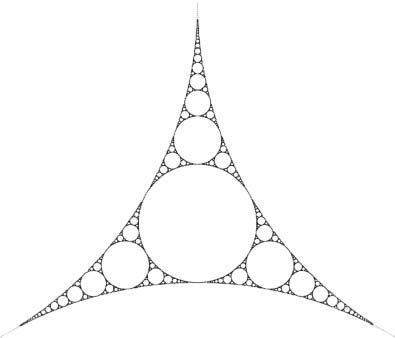
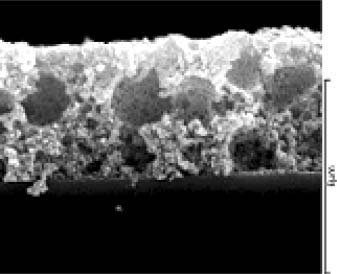
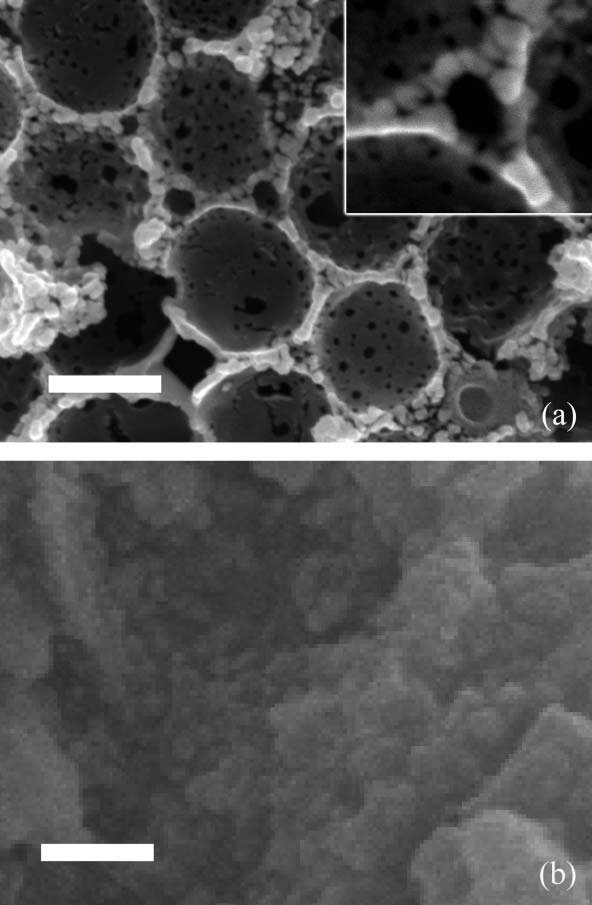
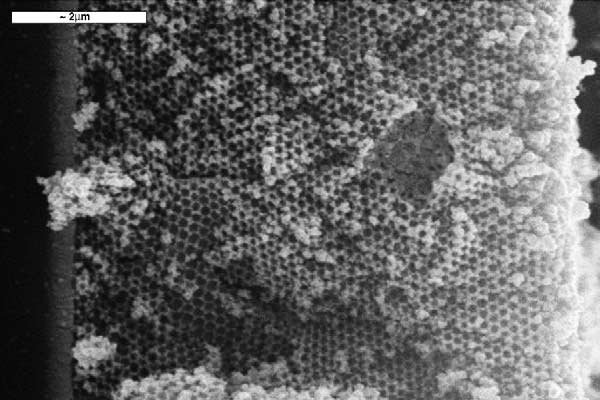
TiO₂ nanoparticles form an Apollonian photonic sponge in which smaller voids occupy the spaces between larger ones. This hierarchical, fractal-like packing creates a broad distribution of scattering lengths within the photoelectrode.
Characterization
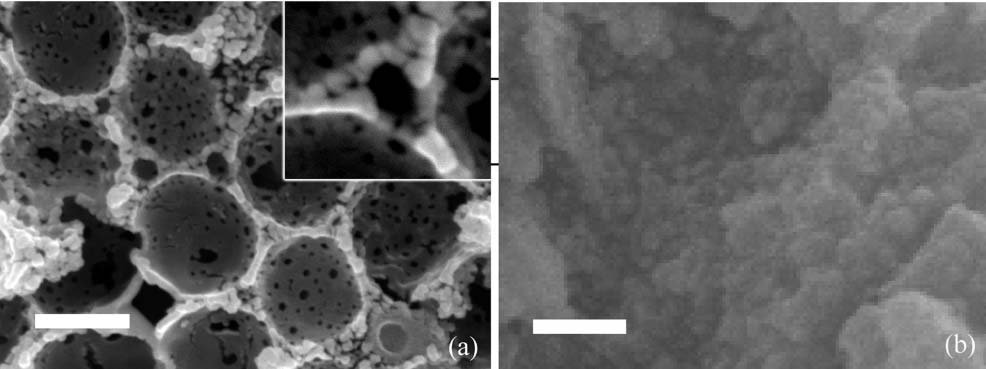
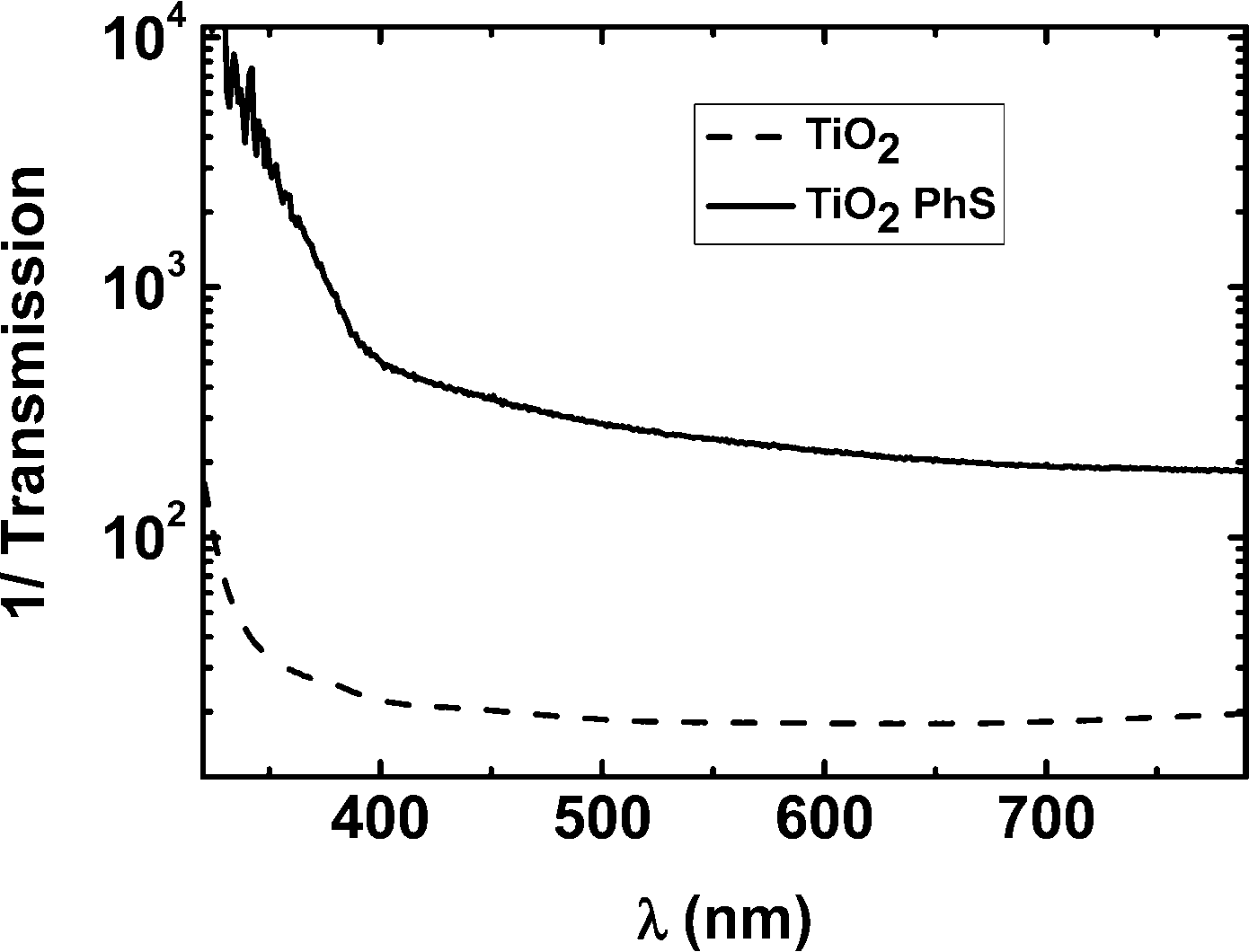
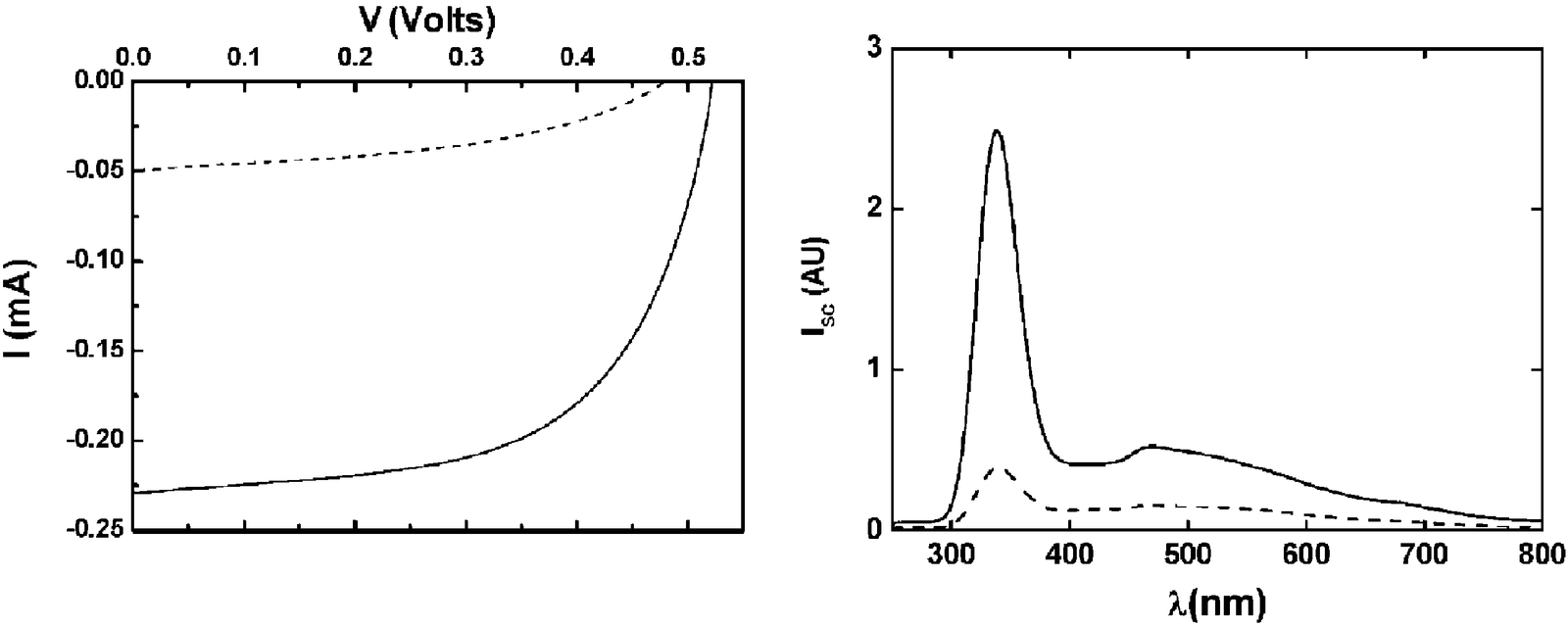
SEM verifies the nested pore morphology, while transmittance and device current-voltage measurements compare it with a densely packed TiO₂ film. The enhanced photocurrent is traced to broadband photon trapping near the titania absorption edge rather than to added absorber mass.
RESEARCH TOPICS
 HarvestingAlthough the porous sponge contains about 3.7 times less photoactive material because its void fraction is roughly 85%, it traps incident light efficiently across the useful UV-visible range. The relevant result is therefore the response obtained per amount of TiO2, not simply the absolute current of a thicker conventional film.
 InterferenceUnlike an inverse opal, whose slowdown is concentrated near a photonic-band edge, the sponge uses multiple scattering from a hierarchy of cavity sizes. The broad response follows from the absence of a single periodicity and complements narrow-band Bragg localisation.
 MaterialsThe inverse sponge is templated from latex spheres of 1500, 400, 300 and 150 nm mixed in an 82:12:4:2 ratio to approximate quasi-Apollony packing. Its extreme porosity reduces active mass but increases optical path length and access to the internal surface, making topology a measurable material parameter rather than decorative porosity.
 ChemistryThe study explicitly notes that the chosen pH of 3 and modified synthesis are not the recipe for a high-efficiency Grätzel cell; absolute efficiencies are therefore low. That caveat is scientifically important: the experiment is a proof of the photonic-sponge light-harvesting mechanism, while gentler synthesis or more robust templates would be needed to combine it with optimized charge-transfer chemistry.