Research · Publication & note
Optoelectronic properties of octahedral molybdenum cluster-based materials at a single crystal level - Notes
Research article
Published abstract
Octahedral molybdenum (Mo6) clusters constitute suitable building blocks for the design of promising single crystal materials in the field of optoelectronics. Here, we prepared single crystals composed of hydroxo Mo6X8 (X = Br, Cl) cluster complexes interconnected by H-bonding interactions with water molecules and protons. The optoelectronic responses and the absorption and emission spectra of these cluster-based single crystals were acquired upon light irradiation, and they show dependency on the nature of the halogens, with the brominated cluster being the most conductive. A fast photoelectrical response was recorded and it showed remarkable stability after multiple illumination on/off cycles. The results obtained provide relevant information for the development of photonic and optoelectronic devices, sensors and photocatalysts.
Figures
Source: E. Segura-Sanchis et al., Dalton Transactions 52, 17818-17825 (2023), CC BY-NC 4.0.
Source: E. Segura-Sanchis et al., Dalton Transactions 52, 17818-17825 (2023), CC BY-NC 4.0.
Source: E. Segura-Sanchis et al., Dalton Transactions 52, 17818-17825 (2023), CC BY-NC 4.0.
Source: E. Segura-Sanchis et al., Dalton Transactions 52, 17818-17825 (2023), CC BY-NC 4.0.
Article access and reuse
This article is published under the Creative Commons Attribution-NonCommercial 4.0 licence. Official RSC article record · CC BY-NC 4.0 licence · RSC licences, copyright and permissions.
Related publications
Research fields
Bottom-up
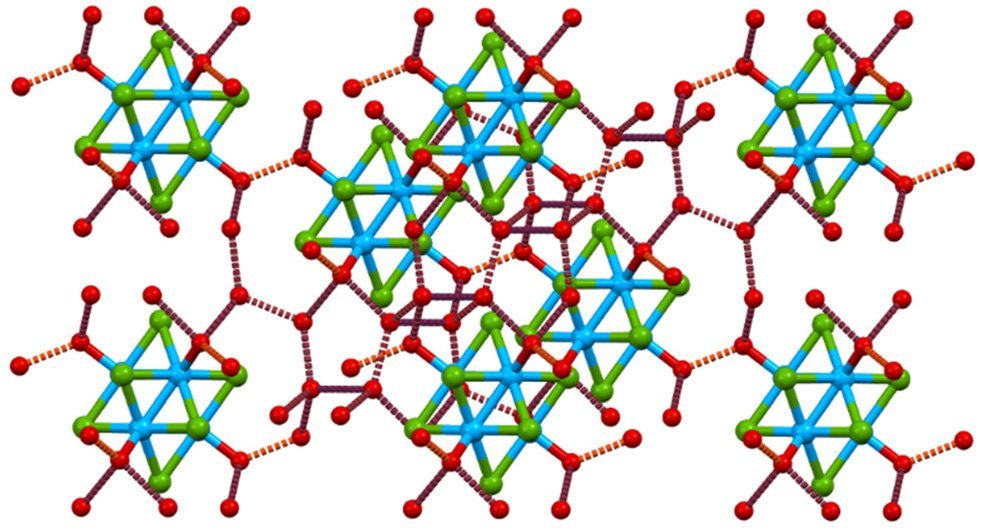
Aquahydroxo molybdenum-cluster single crystals containing chloride or bromide ligands are grown from alkaline aqueous solutions. Their hydrogen-bonded crystal network makes it possible to study cluster-derived optical and electrical behaviour without averaging over a powder or composite film.
Simulations & fits
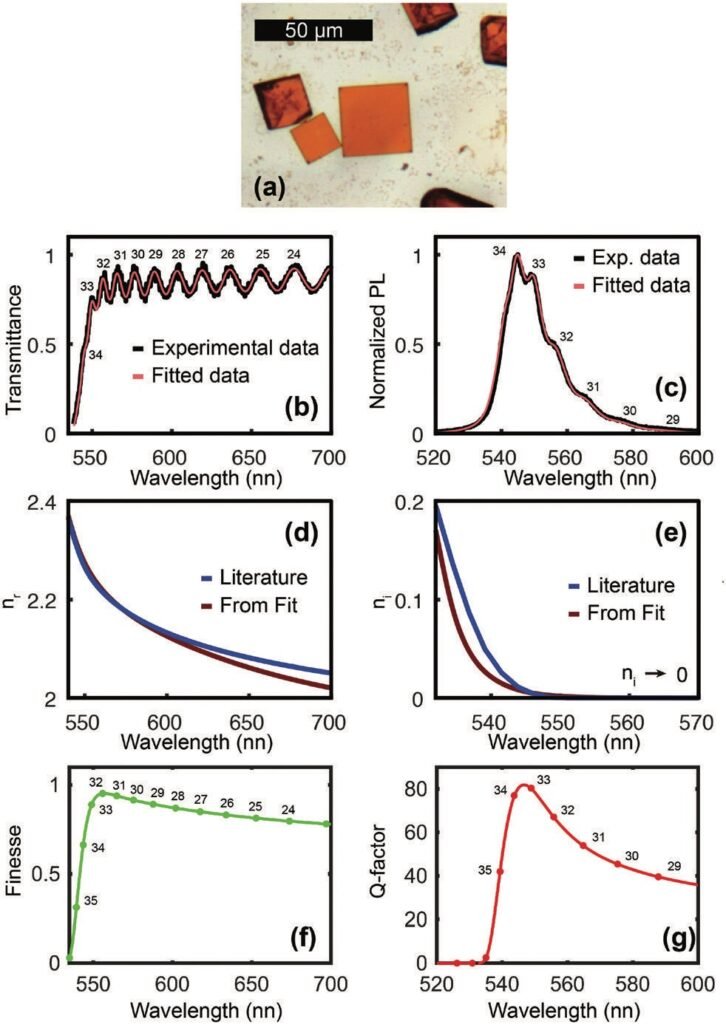
The crystal dimensions and refractive response are interpreted through a Fabry-Pérot cavity model. This identifies the larger bromide crystals as optical microresonators and distinguishes cavity fringes from the intrinsic cluster photoluminescence.
Characterization
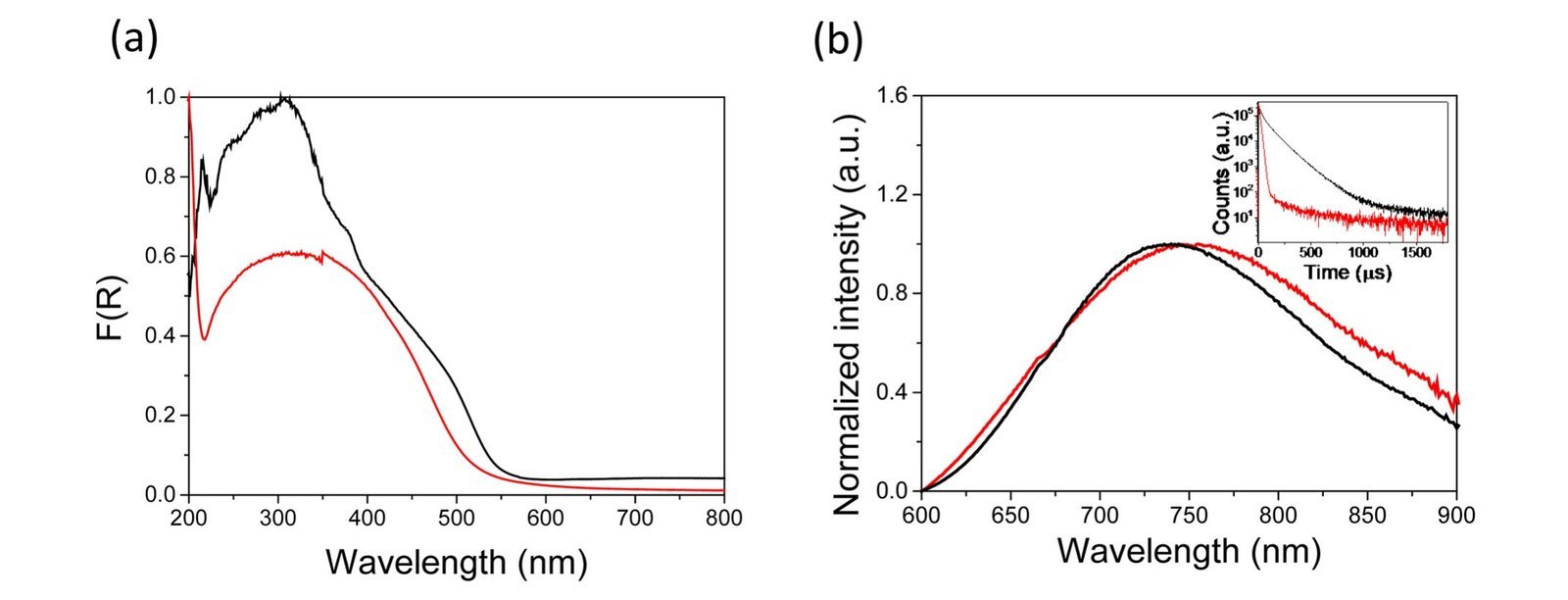
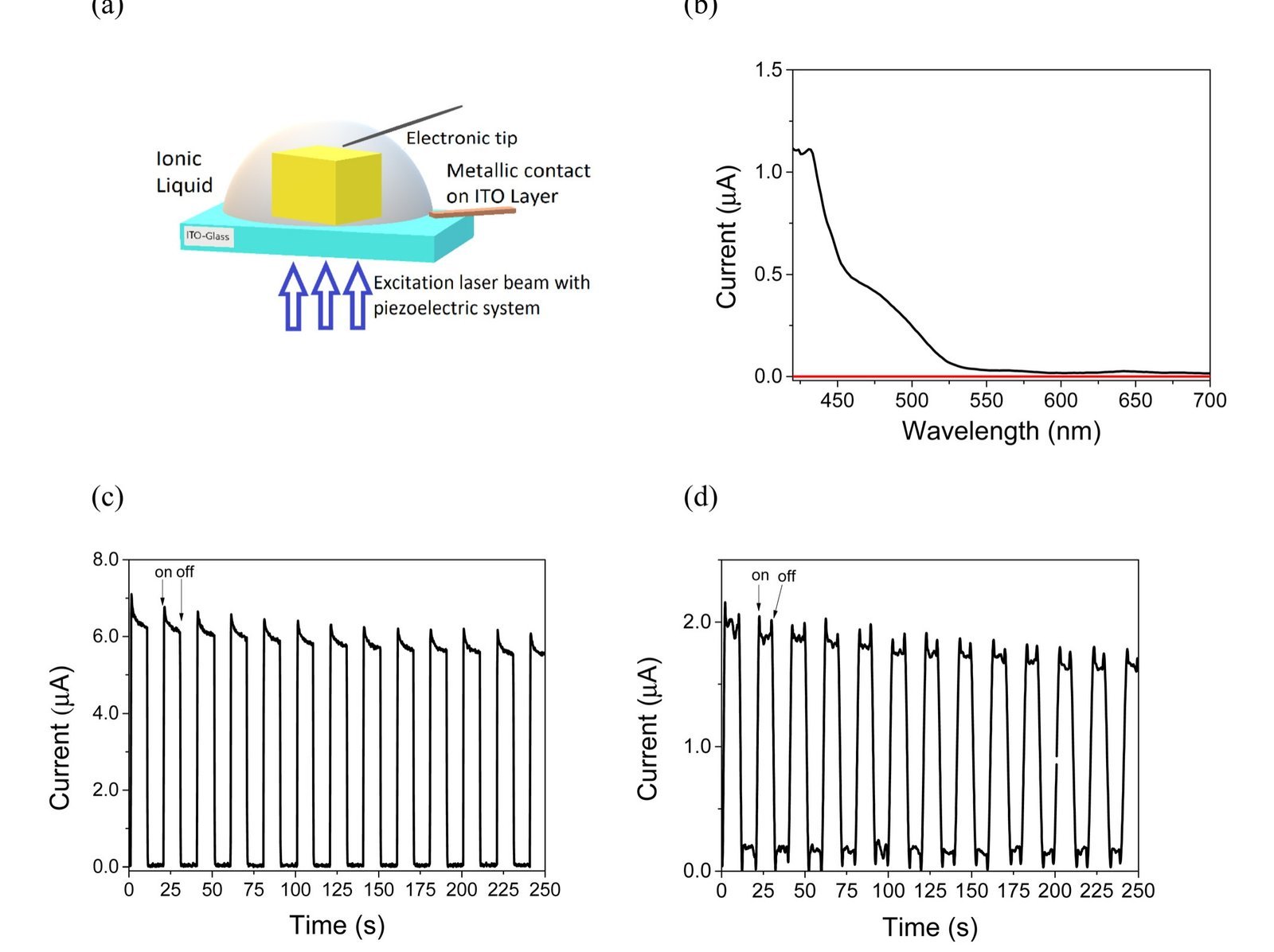
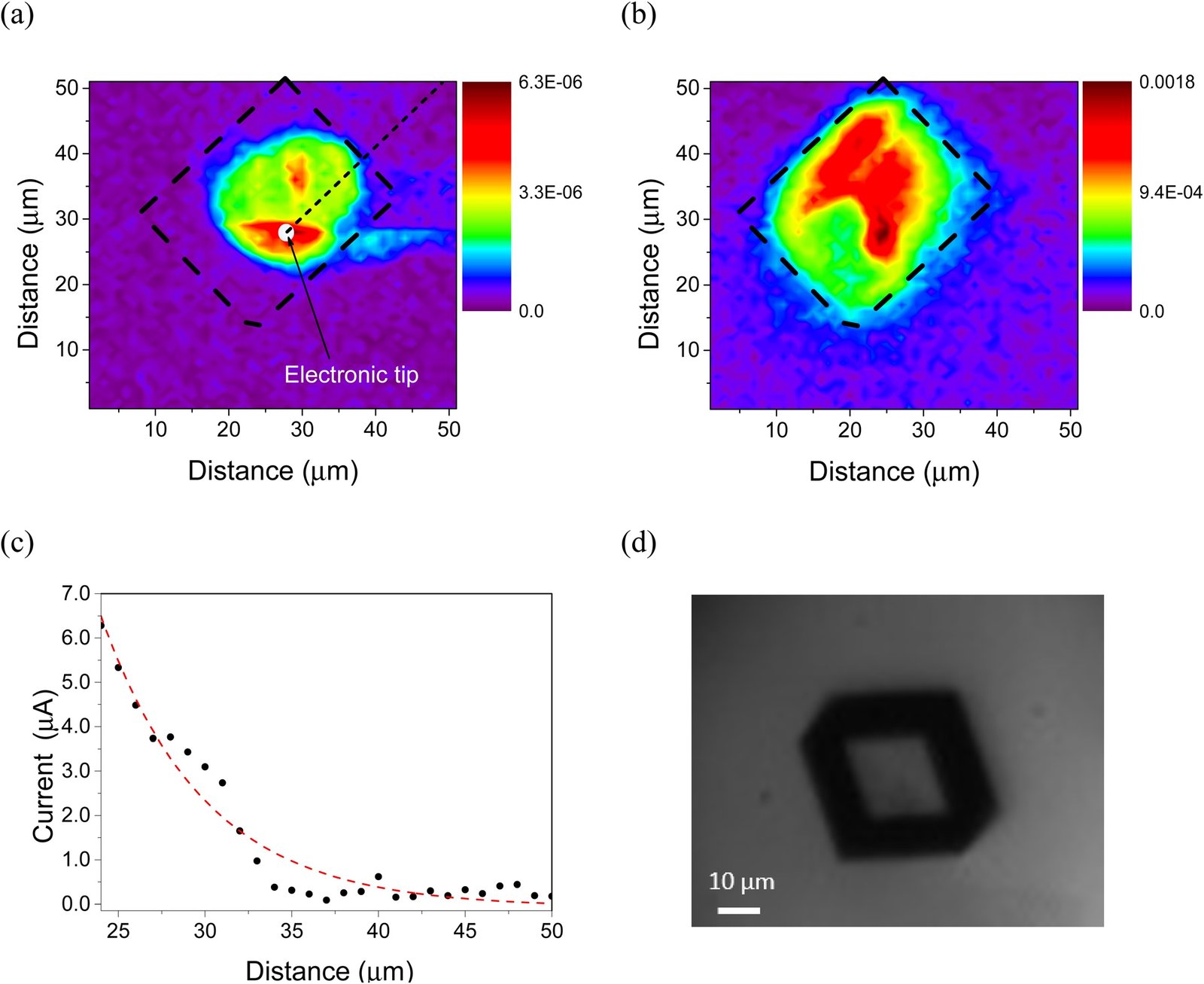
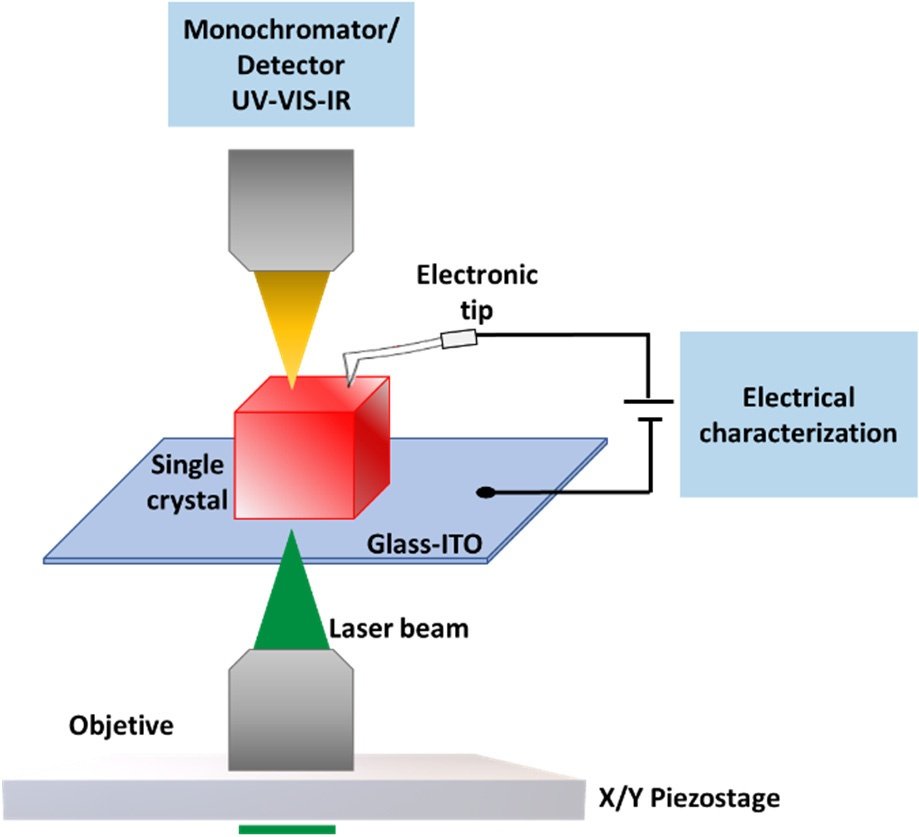
Diffuse reflectance, steady-state and time-resolved photoluminescence, wavelength-resolved photocurrent and spatial photocurrent maps are measured on individual crystals. The maps compare local carrier collection with emission and reveal the effect of the electrical probe contact across a single specimen.
RESEARCH TOPICS
 EmissionBoth cluster crystals emit in the red/near-infrared from the triplet state of the {Mo6X8}4+ core after intersystem crossing. The comparison shows why spectral colour alone is insufficient to characterise how halogen substitution changes excited-state dynamics.
 MaterialsMeasurements are performed at single-crystal scale to exclude grain-boundary and amorphous-domain contributions present in pressed powders or polycrystalline films. Current-time traces under 405 nm illumination remain repeatable over multiple on/off cycles, showing that the photoresponse is a property of the crystal rather than an irreversible charging artefact.
 ChemistryMoCl and MoBr retain comparable octahedral Mo6 cluster frameworks while changing the inner halogen. Figure 1 shows clusters connected into layers by hydrogen bonding to water molecules and protons.